If there ever was a year of the indie game, it really does feel like 2025 is that year. Practically everything I played the entire year was from a small or mid-sized studio, and AAA stuff was more few and far between as it feels like it’s ever been.
It’s exciting—even as we’re seeing more and more post-pandemic fallout blow through the games industry, combined with a litany of layoffs and corporate consolidation—it feels like there’s more and more room on the margins for passionate creators to get their stuff out there. Hopefully that continues to hold true into 2026 and beyond, as consumer electronics hardware faces some serious headwinds to its continued price viability.
Anyway, no time to think about all that scary business! Let’s get into my personal favorite games of the year.
Real quick, a couple disclaimers –
Quick obligatory notes:
- This is a ranked Top 10 list with 3 honorable mentions (unranked).
- Each game features a link to one of my favorite pieces of music from its soundtrack or to a clip of the game. Feel free to listen as you read.
- I consider the release timing of Early Access games based on when they exit Early Access, or enter V1.0.
- Remakes (which are becoming even more common these days) can be on my lists, but only if they are substantial enough in that the game is something fundamentally different. Examples of games I counted in 2019 were Pathologic 2 or Resident Evil 2. In 2020, I didn’t consider a game like Demon’s Souls (even though I loved it) because it is mostly a visual overhaul to the 2009 original game. Hopefully that distinction makes sense and isn’t just arbitrary to you.
Pile of Shame (games I didn’t have time to play this year):
- Kingdom Come: Deliverance II
- Vampire: The Masquerade – Bloodlines 2
- Hell is Us
- Ghost of Yotei
- Battlefield 6
Okay, with that out of the way, on to the list…
Honorable Mentions:
Routine – Lunar Software
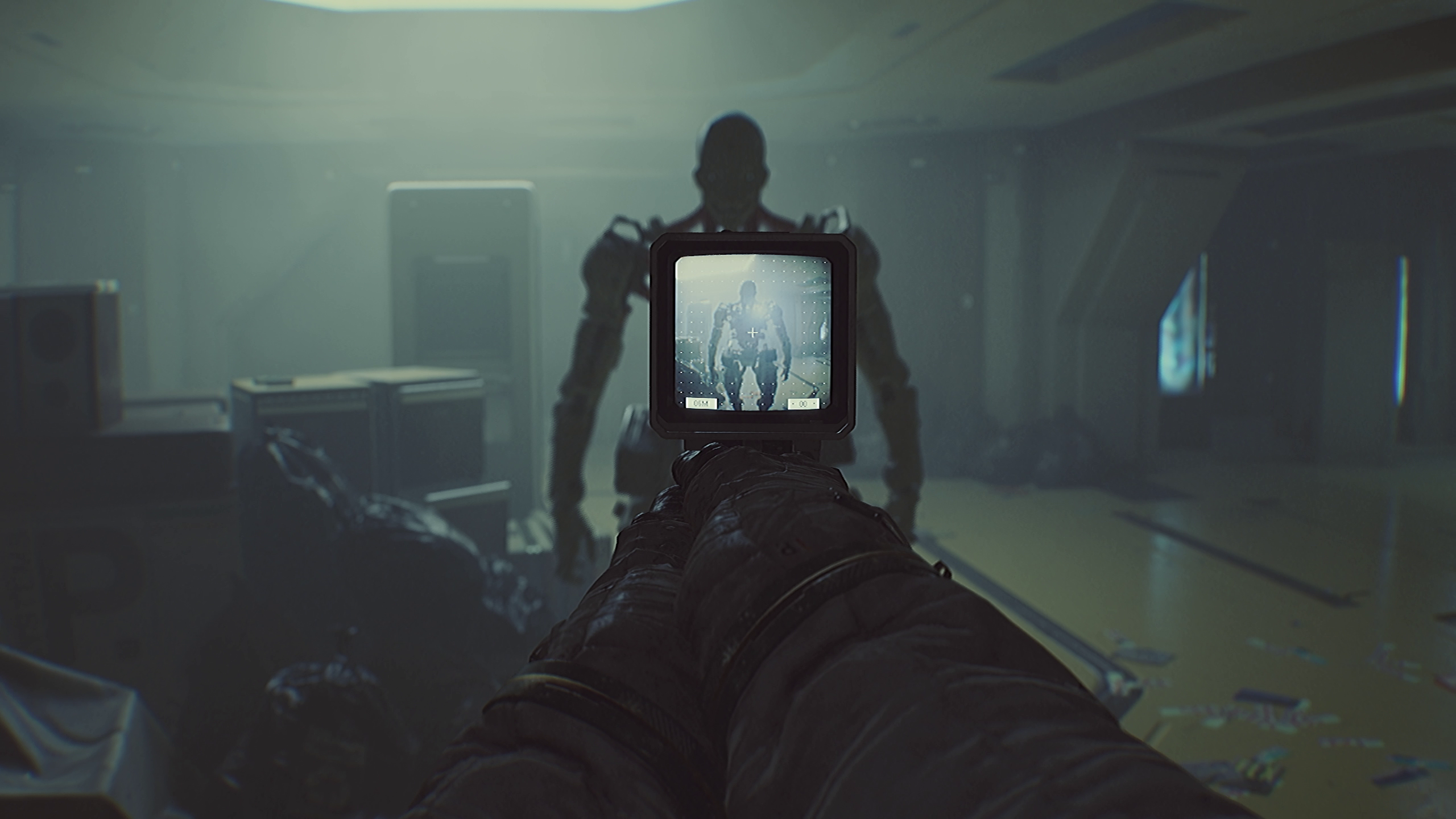
Excuse me, sir. Could you perhaps chill while I degauss my display?
Routine Intro – NJ Apostol
The fact that I’m getting the opportunity to write about Routine at all still blows my mind. This game originally caught my eye all the way back in 2012, when myself and a college buddy first caught a glimpse of its Steam Greenlight page—a Valve initiative to gauge user interest that felt huge at the time, but is now all but ancient history. Back when Routine was first announced, horror games like “Amnesia: The Dark Descent” were still very much in the popular consciousness. This was a world before P.T., before RE7, before Alien: Isolation. A lot has changed in the horror gaming landscape since those halcyon days. So what in the world does a horror game look like after thirteen years of development hell? Well, if Routine is any indication, then the answer is: pretty fucking scary.
Routine is premised on an alternate 1980s vision of the future – a world where we got lunar resorts on the moon, complete with their own shopping malls, where we got handheld computers, but with sub-10Hz CRT displays that needed a dedicated “degauss” button—look that one up, kids. Routine’s embrace of analog technology runs deep – the entire game is presented through a thick postprocessing filter that feels like the stuff of 8 and 16-bit console emulators. Thanks to this , Routine tends to obliterate the amount of detail you’d expect from a modern UE5 game on a 4K panel. That tradeoff, though pretty jarring at first, ends up contributing to a vibe that horror games used to have, albeit by necessity—you can’t reliably make out the finer detail of the things that are hunting you, and that lack of information does trigger your fight-or-flight response that much more. On top of this, Routine’s main defensive and puzzle-solving tool, the C.A.T., is an intentionally clunky device to use, forcing you to fumble with in-game buttons on the side of it, all while a threat is closing in on you. It calls back to old-school horror titles, where the cumbersome controls required you to play out a whole scenario on your controller just to fight back—and do it all under extreme duress.
Routine starts off very simply. You wake up in Union Plaza, the aforementioned lunar resort, and the game teaches you some basic movement controls before turning you lose completely. After the first room, Routine will not be holding your hand any further. This becomes very clear, very quickly the first time you encounter one of the Type-05 robots and find yourself needing to learn under pressure. While most horror games typically allow the player time to familiarize themselves with an environment and its puzzles before ratcheting up the tension, Routine violates this design philosophy, oftentimes asking the player to solve puzzles while under the proverbial gun. There were multiple times in this game that I had to ditch out of a computer console I was investigating to deal with a Type-05 that was marching right up behind me. It’s been a while since I’ve played a horror game where I couldn’t count on the presence of a puzzle being a signal that I was currently in a safe room. To not be able to rely on that is intense.
This is made all the more effective by the top-tier sound design. Apparently Mick Gordon worked on this project for a while as a sound designer before handing the reigns over to current Audio Lead NJ Apostol. Well, regardless of which of them is responsible, I can safely say the scene where the Type-05 is first introduced really fucked me up, in the best way possible. Even more sinister is the gameplay conceit that only one Type-05 can be “active” at any point, making for some tense moments where you try to slink past a handful of inactive machines, only to have one of them loudly sputter to life right behind you.
There’s more to Routine than meets the eye. It has an atypical structure, with an absolutely diabolical Act 2 reveal that caught me off-guard in a big way. It’s a brief experience, but excellently paced. It’s perhaps the scariest game I’ve played since 2020’s Visage. I don’t know if any game is worth a 13 year wait, but I was positively giddy to find that Routine—while not the open-ended game it was originally pitched as—actually ended up as something I loved playing through.
Atomfall – Rebellion Developments
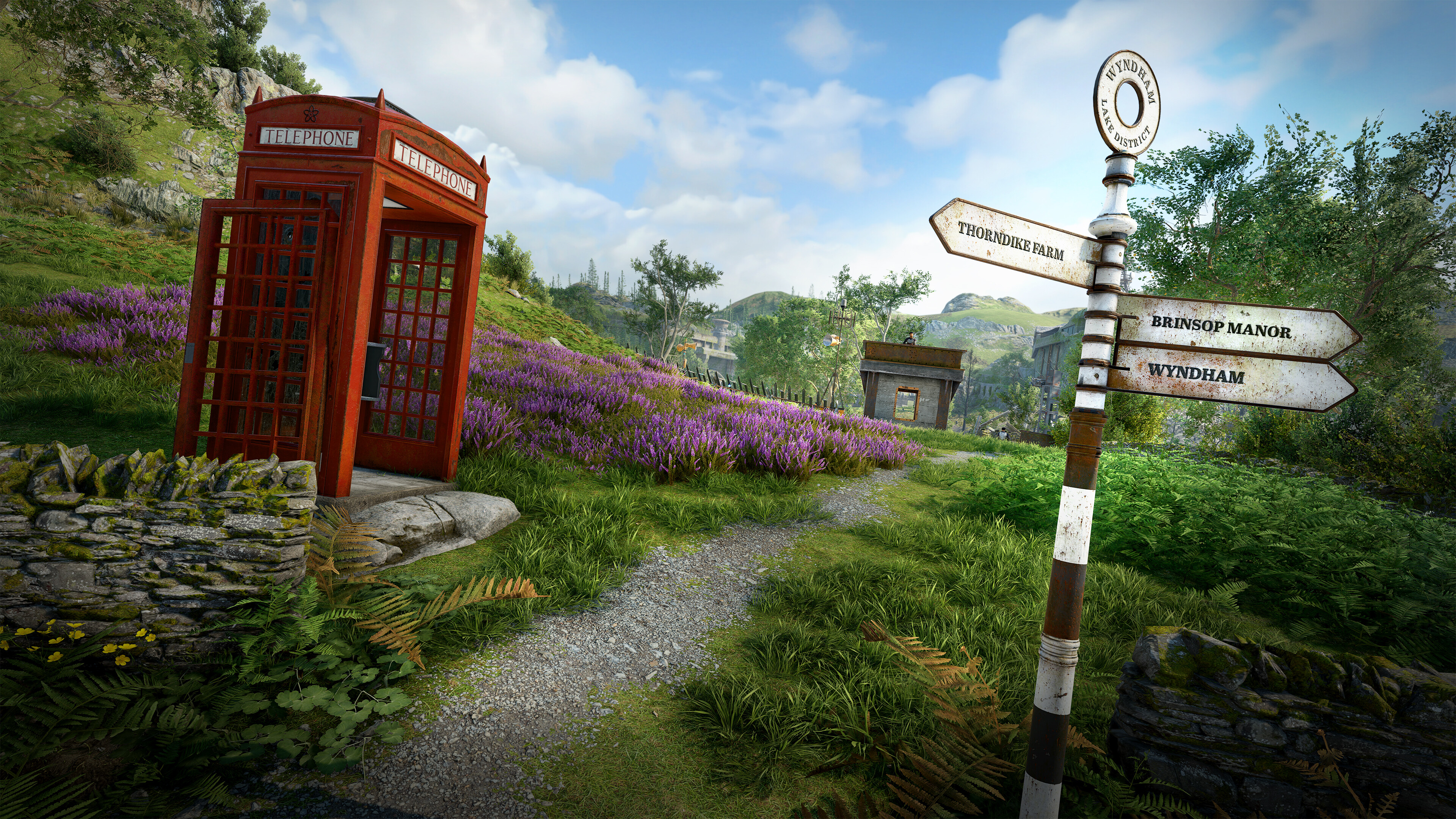
The obligatory Red Phone Booth—in case things weren’t British enough for you.
Credits – Graham Gatheral
Atomfall is based on an alternate British history in which the 1957 Windscale fire nuclear disaster—the worst in the UK’s history—was even more of a total cock-up than it already was. Instead of burning for 3 straight days and releasing radioactive fallout across Europe, it instead resulted in irradiated monsters, reports of people hearing voices, the formation of cults, and an indefinite government quarantine. You know, the usual suspects of the dystopian video game genre. On the surface, you might think this is Fallout: New Birmingham, and well, you’d be half-right. There’s certainly some of the DNA of Fallout: New Vegas running through the heart of Atomfall, but mostly in a structural way. This isn’t a huge, open-world RPG. It’s more condensed—smaller in scope as well as mechanics—but laser-focused on exploration and nonlinear design.
That unique structure is the singular differentiator for Atomfall. From the outset, your goal is pretty clear—get inside “The Interchange” and find out what the government is hiding there—but the way in which you carve a path through the game to achieve that goal is completely freeform. There isn’t any objective marker, or even a traditional quest log, to guide you. Instead, you rely on a journal of leads—which functions like a collection of threads you can tug at to make progress. This makes for a much more organic quest structure, where you can suss out information through dialog with NPCs, exploration of the environment, by bartering with merchants, or simply by accident—if you somehow manage to Forrest Gump your way into key locations.
The layout of the map itself is also a key component of this. The game world is divided up into 5 distinct playable areas, each of which is a large open space with numerous pathways between one another. No matter what, you will start your playthrough in Slatten Dale—a scenic locale showcasing Britain’s distinct green rolling hills, now rife with raiding parties and bombed out infrastructure—and you will end the game in The Interchange—a massive WWII-era bunker and research complex, with Metroidvania-esque shortcuts connecting it to each and every other playable area. There’s no fast travel here, so finding your own personal routing to traverse the map safely and efficiently is a big part of what makes Atomfall’s exploration so engaging.
Atomfall is the type of game that harkens back to the 7th generation of video game consoles, both in ways that are refreshing and in some less so. The combat is serviceable, but nothing to write home about. The environments look great, but can get pretty same-y looking if you really go deep with the exploration. Even the story is pretty wrote and predictable. That said, there is something about the way this game throws you the keys and then rightly fucks off, leaving you in charge of how you want to play it that is hugely welcome.
Elden Ring Nightreign – FromSoftware
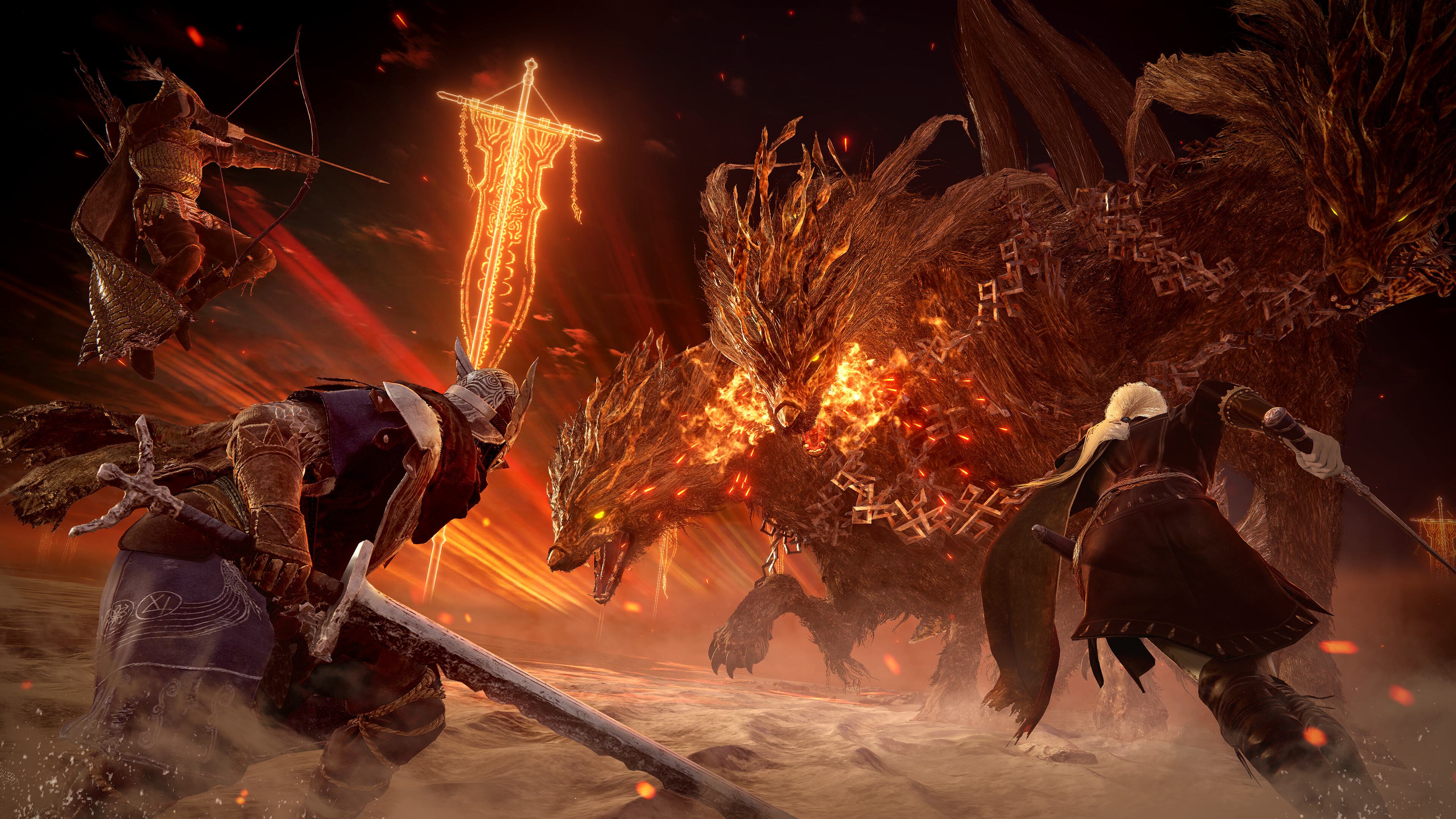
Do you guys think Let Me Solo Her plays this game?
The Shrouded Roundtable Hold – Shoi Miyazawa
On the surface, the concept for Elden Ring: Nightreign is a strange one. It lifts the core combat of Elden Ring and grafts it onto a time-limited, PvE-only multiplayer extraction framework reminiscent of Fortnite or PUBG, then layers on a hero-shooter structure, complete with unique abilities and even ultimates in the vein of Overwatch. For a studio like FromSoftware, whose ambitions have traditionally been obsessively inward-facing, focused on perfecting a subgenre they themselves created, Nightreign feels startlingly reactive to broader industry trends. And yet it’s still unmistakably a FromSoft game, with all the hyper-specific eccentricities that implies—and, more importantly, it’s just a genuinely great time with friends.
When the rubber meets the road, Nightreign still plays like Elden Ring—just with the seats, radio, and air conditioning stripped out, all in the name of going fast. Your character stats are reduced to basic letter grades, sprinting speed is cranked to 11, and leveling up is done in a single button press. For some, this aggressive streamlining of the Elden Ring formula may be a bridge too far. I was genuinely overwhelmed during my first few runs as I tried to learn the map, the loot, and the traversal mechanics while scrambling to keep up with my far more experienced teammates. It often feels as if Nightreign took its cues from Elden Ring’s speedrunning community, and the result is a brutally steep learning curve right out of the gate.
It’s worth sticking with Nightreign through that initial uphill climb—at least to get to the Nightlord bosses that cap off each run. These are seriously excellent fights, made even better because they are actually balanced around a trio of players. You can technically fight these guys solo like an unrepentant tryhard (their HP scales accordingly), but I don’t recommend it. For the first time in FromSoft history, cooperative play doesn’t feel like cheating or trivializing a tough boss—it’s the intended experience, and it’s worth embracing that fact.
One of my favorite aspects of Nightreign is how certain character classes harken back to the unique styles and mechanics of past FromSoft games. Take the Duchess, one of my personal favorites: she evades with a swift double quickstep instead of roll dodges and wields a diabolical ability to replay the last 3 seconds of damage to all nearby enemies, setting her up for filthy riposte-focused builds. If her Lady Maria-esque fashion doesn’t immediately give you Bloodborne, her high mobility and her kit certainly will. Then there’s the Executor, an armor-clad, katana-wielding Dex/Arcane class who specializes in deflecting attacks with his blade—if you ever mourned Sekiro’s lack of multiplayer, this character is a humble apology from Miyazaki to you. And just to shout it out, I loved playing Ironeye—it’s the first time in a FromSoft game where playing an archer felt both fun and totally viable.
The love letter to fans extends to the boss battles too. I can’t even tell you how much I freaked out when my friends and I assembled for a Night 2 boss fight, only to see the health bar for Nameless King pop up at the bottom of my screen—one of the coolest gaming moments from all of 2025, hands down. There are other certified classics for the oldheads out there, like everyone’s favorite psychosexual nightmare from Dark Souls, Gaping Dragon, and The Duke’s Dear Freja from Dark Souls II—a boss whose double-ended design actually makes a lot more sense in co-op. Is it fan service? Absolutely. Am I above that sort of thing when it comes to FromSoftware games? No, I am not.
Nightreign sees FromSoftware taking a well-deserved victory lap after one of the longest running hot streaks in video game developer history. After putting out absolute bangers—as well as top-tier DLCs for said bangers—for the last 15+ years, it makes sense that Miyazaki and team would want to try something smaller in scope, precision-focused on cooperative gameplay (an element present in their games since Demon’s Souls but still hampered by awkward barriers to entry). That’s not to give Nightreign a pass, though. By definition, it’s a bit of a cash grab—most of the art assets, enemies, bosses, and weapons are lifted directly from Elden Ring. I also strongly suspect that Nightreign was, at least in part, a way to financially offset Elden Ring’s extended development time. The thing is, none of that diminishes how much fun it was—the most I had with a multiplayer game in 2025.
I’m someone whose intro to the FromSoft pantheon came via a good—and exceedingly patient—friend who dropped summon sign after summon sign, carrying my hollow ass through all manner of challenge. Eventually, like many in the diehard fanbase—of which I now humbly consider myself a card-carrying member—I got good: I learned to parry, nail dodge timings, and solo bosses. By the time Elden Ring dropped, I saw FromSoft games as purely single-player affairs. In fact, the co-op elements in Elden Ring always felt at odds with the open-world exploration, at least for me. So given my own personal journey, and the fact that I played Elden Ring almost exclusively by myself, a game like Nightreign—where co-op is the sole focus—feels like a homecoming. I’d like to think I don’t need as much carrying as I used to, but I’m not sure if my teammates would agree.
Continue reading
 defectivepixeltest