People like to talk about what the singular best years for video game releases were. Was is 1998? We got Ocarina of Time, Half-Life, Metal Gear Solid, and Resident Evil 2 all in that year. Was it 2004? That year had Halo 2, Half-Life 2, Metroid Prime 2, Metal Gear Solid 3, and GTA: San Andreas, all released within less than a month of one another – holy shit. Was it 2007? This is my pick – it had Portal, Call of Duty 4: Modern Warfare, Half-Life 2: Episode 2, Halo 3, Rock Band, Super Mario Galaxy, Mass Effect, Team Fortress 2, and Bioshock. Other heavyweights to me include 2013 and 2015 and 2017.
Enter 2023. In the aftermath of the pandemic and a slew of delays – including a sputtering start to the new generation of consoles – this is the year where it felt like things were finally clicking into place. The year got off to a bit of a slow start, but by summer it was just release after release until the very end. Naturally, I wasn’t able to get around to everything I wanted to get my hands on in such a crowded year, so I’ll have a few disclaimers here in a bit. But yeah, all in all, this was an incredible year for the release calendar filled with some massive hits and – sadly – some massive misses. The only downside for me is that, with so much having crowded the 2023 calendar, what’s left to still come out in 2024…? Whatever, that’s an issue for another time – we’re focused on the good stuff of 2023 today, so let’s get to it.
All that said, let’s get into my personal favorite games of the year.
Real quick, a couple disclaimers –
Quick obligatory notes:
- This is a ranked Top 10 list with 3 honorable mentions (unranked).
- Each game features a link to one of my favorite pieces of music from its soundtrack or to a clip of the game. Feel free to listen as you read.
- I consider the release timing of Early Access games based on when they exit Early Access, or enter V1.0.
- Remakes (which are becoming even more common these days) can be on my lists, but only if they are substantial enough in that the game is something fundamentally different. Examples of games I counted in 2019 were Pathologic 2 or Resident Evil 2. In 2020, I didn’t consider a game like Demon’s Souls (even though I loved it) because it is mostly a visual overhaul to the 2009 original game. Hopefully that distinction makes sense and isn’t just arbitrary to you.
Pile of Shame (games I didn’t have time to play):
- Star Wars Jedi: Survivor
- Darkest Dungeon II
- Armored Core 6
- Lords of the Fallen
- The Talos Principle 2
- Avatar: Frontiers of Pandora
Okay, with that out of the way, on to the list…
Honorable Mentions:
Final Fantasy XVI – Square Enix Creative Business Unit III
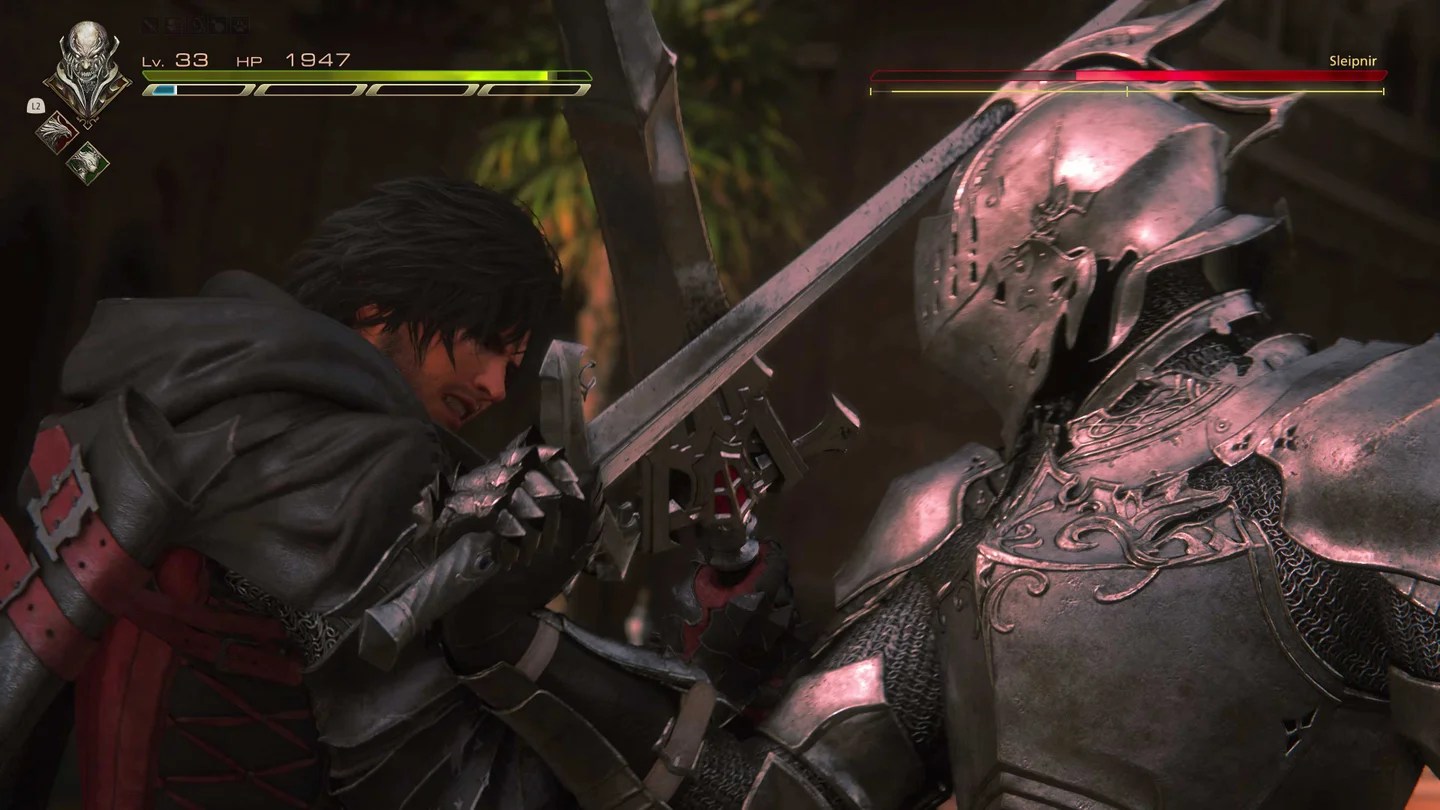
This is feeling like one of those cinematic clash things. Best mash square like always.
Full disclosure: I don’t play MMOs. So, while I can’t speak on it directly, I have heard lots of good things, from people whose opinions I trust, about Final Fantasy XIV. I’ve heard praise heaped upon it, lots of which centers around the world and storylines and characters crafted for it, with many claiming it to be some of the best in the long-running series. So, while I never deigned to play it for myself, you can imagine my excitement when I heard that Creative Business Unit III — Square Enix’s extremely punk-rock name for one of its many internal development teams — would be heading up the next mainline, single-player Final Fantasy game. Naoki Yoshida, credited with resurrecting the disastrous 1.0 launch version of FF14, would now be producing FF16 and bringing a lot of that same team along with him, with key artists reprising their role, the same lead writer handling the script, and Masayoshi Soken once again handling the music. I was primed to be excited.
Final Fantasy XVI kicks off with so much promise. Its introduction establishes the world of Valisthea, a dark fantasy realm in which entrenched ruling parties vie for control of its twin continents, Ash and Storm. In this world, the ability to harness magic is something you are either born with or you aren’t. Those that can wield it are dubbed “Bearers”, and their meager abilities to channel the elements are exploited for the benefit of the various political dynasties. Mothers of bearers give up their children at birth, condemning them to a life of servitude to their country. Set against this background are the Eikons, unbelievably powerful arbiters of the magical elements that each serve as their respective nation state’s superweapon. Eikons — which series veterans will recognize as summons from games past e.g. Shiva, Ramuh, Titan, etc. — are channeled through chosen individuals called Dominants. Their massive capacity for destruction — akin to that of a nuclear weapon — make them key to each nation state’s war machine, and no serious sovereign state can ensure its security without one.
You play as Clive Rosfield, eldest brother in the royal lineage of Rosaria, who is passed over for succeeding the throne when his younger brother Joshua is revealed to be the Dominant of Fire — conduit of the Eikon Phoenix. Rather than bemoan this situation as some insult to his honor, Clive instead takes up the role of Joshua’s Shield, swearing his life to protect him, and by extension, the Kingdom of Rosaria. The early hours of the game build up the relationship between Clive and Joshua — as well as their childhood friend Jill — just before, in a moment of shocking calamity, everything completely unravels around them. The intro of this game is a whirlwind of spectacle and violence and tragedy, setting the stage for the story proper in a way that had me on the edge of my seat. This is a Final Fantasy game that pulls exactly zero punches.
Given this dour world and darker tone, the writers of the game were smart to avoid the series staple moody-boy trope for their protagonist. Clive, brilliantly voiced by Ben Starr, is a much more honorable and sympathetic character, and dare I say one of my favorite leads in the entire history of the series. The thing is, he really needed to be. Clive isn’t just a “Bearer” in the magical sense, he’s also the load-bearing support for the entire game. See, in a series first, FFXVI makes the bold move to eliminate playable party members from the game, instead relegating all companions to the role of tagalong NPCs. They have no stats, no move list, no swappable equipment. It’s a real shame too, because some of the supporting cast are really memorable in their own right. Most specifically Cidolfus “Cid” Telamon, voiced by the incomparable Ralph Ineson, a man who I could happily listen to describe drywall for hours on end. But, at the end of the day, Clive has scant few friends along for his journey, and the total lack of playable party members is a series element that I sorely, sorely missed during my time with FFXVI.
I’m as shocked as anyone to be saying this, but it really is the lore of FFXVI that makes it stand out in the scope of other RPGs. There is tons of it, from the fleshed out histories and cultures of each of the game’s primary nations, to the way their brutal political actors seek to acquire and maintain power. There’s so much of it, in fact, that the game opted to include a system it calls “Active Time Lore” — a hilariously stupid name for something that I actually hugely appreciated. The system allows you to pause the game at any time, cutscene or not, and see a recap of the top 5 or so topics or characters that have been mentioned, giving you time to brush up on what they are or why someone was talking about it. Essentially, this system avoids the need to invent a “fish out of water” character to be constantly asking questions of everyone they meet, allowing the whole cast to feel grounded in the world and speak more naturally. You won’t find a lot of lazy exposition delivery. Instead, characters talk as though they’ve lived in this world long before you see them for the first time. There’s no “Joshua, you’ve been my brother for how many years now?” lines thrown in. It’s refreshing even as it was probably invented out of total necessity, given the sheer volume of terms and locations that get tossed around in the script.
To lead its more action-based gameplay, FFXVI put Ryota Suzuki in the role of lead combat director. His resume is a long list of heavy hitters from his time at Capcom, including Devil May Cry 4 and 5, Dragon’s Dogma, Ultimate Marvel vs. Capcom 3, and even Monster Hunter: World. Given that, it’s no surprise that Final Fantasy XVI is an absolute blast to play. The system is reminiscent of controlling Dante in Devil May Cry 4 and 5, revolving primarily on toggling between different “modes” that change up Clive’s fighting style and special attacks on the fly. Each mode has an associated element, imbuing his ranged casts with that element, but they also each have an innate power that can be used on demand with no limits. At first, that ability is Phoenix Shift, an extremely satisfying ability that warps you to the nearest enemy based on your directional input, whether that’s someone on the ground or in the air doesn’t matter. Later, you’ll unlock modes that change that innate ability to one specializing in aerials, a counter-focused shield guard, or even a special weapon with its own finisher gauge.
Most of the build variety in the game revolves around the limitation of only being able to equip 3 of these combat modes at a given time. Graciously, the game makes respec’ing your character a completely free process, incentivizing you to experiment, but this comes at the cost of cheapening the build-making process when everything can be undone and redone in seconds. And, while it is fun to align 3 different combat styles, creating a custom combat flow that makes sense to you and your playstyle, that is just about all the customization the game gives to you. While you can change Clive’s equipment, the options are just so minimalistic that nearly every decision boils down to “pick the sword with the biggest damage number”. There’s some equipment with special effects that you might consider using, but the limited options combined with the lack of other party members means that just about everyone is going to play this game with a very similar version of Clive. Sure, this entry is all about emphasizing the action gameplay, and this system is a lot of fun, but it can also feel hollow at times. In an era where so many action games blur the line between action and role-playing — with an abundance of skill trees, upgrade options, and weapon choices — it’s weird to play a Final Fantasy that seems to be running scared of such things. It’s not 2010 anymore.
And I think that’s the takeaway here with FFXVI. It’s heartbreaking, because the game does so much right. It has the skeleton of a great story in place, it has really great lore with lots of detail and dramatic weight to everything, it has a combat system that is immediately fun to engage with and has some decent depth to boot, it has Masayoshi Soken absolutely crushing it on the soundtrack (seriously, the way he weaves the Final Fantasy Prelude melody into the main theme “Land of Eikons” absolutely rocks), and it has some of the biggest and craziest spectacle I’ve seen in the entire series (let’s just say that the Eikons fights are when the game allows itself to go full anime mode). And yet, despite all of that, there’s another edge to the sword. There’s the absolutely mind-numbing, MMO-style sidequests (the game literally has you fetching dirt at one point), there’s the lack of deeper RPG mechanics, the lack of a party system of other characters for you to bond with, and a crazy inconsistency in quality between the main story and its optional content (for one, cutscene direction and character animation goes from exciting and fluid to stilted and rigid).
With FFXVI, Square Enix chose to min-max their whole game, prioritizing elements that I’ve found to be lacking in mainline Final Fantasy games for years, but at the expense of things that the series was already great at. The end result is a game of astronomically high highs and abysmally low lows. You get the stuff that everyone talked about loving about FFXIV, but apparently that comes with all the stereotypical MMO drudgery along with it. I do recommend playing FFXVI. I really liked it a lot; I even loved it at times. But if you decided to play it, do yourself a favor and skip all the sidequests. You can thank me later.
Lies of P – Neowiz Games
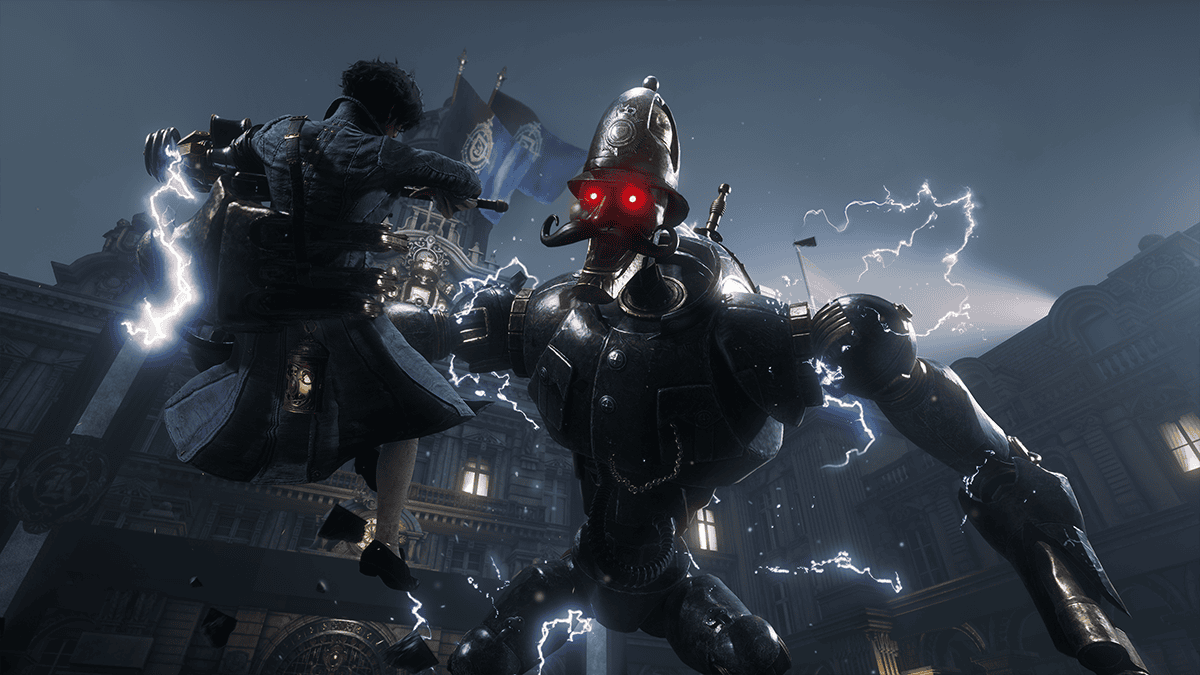
Imagine actually getting grabbed by that attack. Rofl git gud scrub. Try finger but hole.
There’s a few games on my list this year that I feel pretty torn on, but perhaps none of them more so than Lies of P. As a creative work, it is almost too derivative for me to recommend — and of a single, very specific developer no less. Sure, plenty of developers borrow elements from other games, and there is certainly no shortage of studios taking inspiration from Dark Souls, but this is a game that “borrows” all the way down to the UI, core systems, and entire movetsets of main weapons. It’s hard not to cringe at how hard it tries to evoke FromSoftware’s entire oeuvre, and I still feel a little uncomfortable about the plagiaristic vibes I get from it.
And yet, with all those caveats aside, this is perhaps the best Souls-like not made by FromSoftware, at least of the ones I’ve played. Like a great blended malt whisky, there is a distinct art to creating something new out of things you already have. Yes, you could go play Bloodborne and Sekiro again — and I wouldn’t discourage you from revisiting two of the best games of the 2010 decade by any means — but you could also reexperience many of the qualities that made them great, cherry-picked and reconstituted alongside some surprising expressions from elsewhere in the industry. Certain flavor notes are emphasized — ultra-fast enemy attack patterns or Bloodborne’s rally HP regen system, for example — while others are toned down — cryptic storytelling or convoluted gameplay systems, for instance — and the results may be more to your own personal tastes than you might expect.
Lies of P pitches itself as a retelling of Carlo Collodi’s Pinocchio, and in that regard I think it largely succeeds. Set in Krat, a city ravaged both by plague and an army of puppets that have been sent the Order 66 kill code, you play as the titular real boy Pinoccio, who is distinguished from the other puppets by his ability to tell lies and also sell Korean skincare products (just look at that face, goddamn). Seriously, since every combination of sliders in a FromSoft character creator seems to output one form or another of revolting hellspawn, it’s jarring to play one of these games as a traditionally attractive protagonist. The story itself is straightforward enough — remarkably so by FromSoft standards — and does its primary job of establishing a world filled with assholes for you rip and tear your way through. I don’t find it particularly compelling beyond that, and the lying “system” the game employs is little more than a series of binary choices that eventually result in a set of binary endings. Deep lore divers beware, Lies of P is not the game that’s going to inspire your next 3 hour video essay.
That said, I did want to touch on the atmosphere and music here a bit, because I do think the art style and in particular the enemy designs are particularly great, especially in motion. The steampunk-like puppet bosses are a real highlight, the staccato and unnatural way they look and move is really fun to look at…if, you know, you end up watching someone else play, and have time to appreciate that sort of thing. Some of the animation work in this game really is top-notch.
Contrasted against that quality are the environments, which have this odd, flat quality to them that never quite look like they have enough detail. There are moments where the atmosphere manages to overcome this however, and things become convincingly eerie, mysterious, and, at times, even serene. Adding to this is the excellent musical score, which is way better than it has any right to be. For some inexplicable reason, the game relegates a lot of the best music to collectible records that can only be listened to in Hotel Krat — the game’s hub world. A mystifying choice, given how evocative tracks like “Feel” or “Someday” are, but c’est la vie.
Lies of P gets a lot of comparisons drawn straight to Bloodborne, ostensibly because its Belle Époque-styled city of Krat gets mistaken for the more gothic flair of Bloodborne’s Yharnam, but when it comes to combat you actually feel the Sekiro influence more regularly. Much of the combat loop revolves around the timing of perfect parries in order to prevent damage while simultaneously building a hidden “stagger” gague on an enemy. Once active, indicated by a thick white outline around the enemy’s health bar, a fully charged R2 (heavy) attack will actually stun the enemy, queuing them up for a devastating visceral attack. Oops, those are actually called “X”, my bad. See, there’s some Bloodborne that slipped in there after all. Regardless, much of your time disassembling and hacking apart the puppet-denizens of Krat will be spent learning the flow of enemy attack patterns in order to keep yourself afloat. Dodging and blocking are also possible options, of various degrees of viability depending on the enemy. When holding block or simply mistiming your parry, you will take chip damage as punishment, but you will also have a fairly generous amount of time during which you can regain it by dealing damage. Because of this, you can design tankier builds based entirely around guarding like a brick wall and vampirically stealing your own HP back. Often these are your typical strength builds, where you haul around a comically oversized, Cloud Strife-esque weapon slung over your shoulder.
Where things get really interesting, and where Lies of P truly distinguishes itself, is in its weapon assembly system. Likely inspired by the modular nature of the puppets themselves, every weapon in Lies of P can be broken down into two distinct components — blade and handle — and then reattached to its opposite in any arrangement you can dream up. Blades influence a weapon’s raw damage and its effective range while handles influence its stat scaling and entire moveset. You can mix and match these to your heart’s content. Do you like the damage output and reach of the greatsword, but prefer a pokey-pokey moveset like the rapier? You can snap them together and suddenly you’re doing thrust attack combos with a blade the size of a tree trunk. Or combine a handle in something your character scales well with — motivity, for instance, this game’s name for strength — and a blade that has the certain kind of elemental damage you want. When you upgrade a weapon toward the +10 cap, this only upgrades the blade itself, so you’re free to move your blade around from handle to handle until you find a moveset that works for your playstyle. Each component of the weapon also harbors a particular fable art — the game’s name for special attacks that consume “charges”, which you build up by dealing damage — so you’ll have 2 at any given time. Finding synergistic weapon combinations can also be about finding the right special attacks that integrate with your build. It’s a genius system, and one that I feel I still only scratched the surface of by the game’s end. You can spend hours trying to dial-in just the right weapon, and it adds an entirely new layer to trying to hone a build beyond the traditional “strength/dex/quality” stat dynamic. Much as I love the “trick weapon” system from Bloodborne, I might actually prefer this approach, simply for the pure creativity it allows.
Further bolstering the amount of build-tweaking you can do, Lies of P adds a skill tree that it calls the P-Organ system. I’m still not sure if the name is supposed to be a joke or not, to be honest. Regardless, this system allows you to exchange a finite resource — quartz — for various benefits. Some parts of the tree will simply increase your Pulse Cells — healing flasks — while others will allow you more Amulet slots for your character. There’s plenty of niche options too, like increasing the window that an enemy will remain in staggerable status or upping the number of belt slots — quick item access — that the player has available. Within each of these “major” upgrades are smaller “minor” upgrades to things like charge attack damage or lowering the amount of damage you can receive when dodging. Point of all this being, when you combine the traditional Soulslike stats with the Weapon Assembly and P-Organ systems, you get a ridiculous degree of customization for your build. Souls-heads that go crazy for that sort of thing, this might just be your dream game.
It’s pretty clear to me that this is the side of FromSoftware’s games that Neowiz prioritized above all else. This is a game that is absolutely obsessed with build optimization and punishing difficulty of the ass-chapping variety. I’ve never been the best Souls player, but I’m a glutton for their particular brand of punishment nonetheless. However, Lies of P made clear to me what my limits were. I recoiled at how stupidly tough some of the boss fights in this game could be, and — unlike a game like Sekiro — I found I never actually overcame the difficulty curve, finding the right flow to begin mastering the combat. Instead, I flailed and struggled and cursed my way through just about each and every encounter. There are players for whom this will be exceptionally appealing, but for me it was a near-constant struggle.
I don’t want to go so far as to say the game is too hard. However, the way the difficulty was tuned here makes me question the motivations of the developer a bit. The point of the difficulty in the FromSoft games has always been to create a seemingly insurmountable challenge that players can eventually overcome through practice, wits, and sheer determination. It’s a loop that works because of the elation you get as you recognize your own improvement. Lies of P, by contrast, seems hell-bent on topping lists of “most difficult boss fights”. Beyond the first third of the game or so, nearly every boss becomes a 2 phase fight, with an entire healthbar gatekeeping the bad guy’s “true form”. Oftentimes, these 2nd phases behave wildly different than the first — rather than being evolutions of intensity — forcing you to become highly proficient at killing the first phase just to get an opportunity to begin learning the second. It straddles the line between “demanding” and “exhausting” a bit too much for my taste.
It’s a bit of shame the game feels so overtuned too, because many of its bosses are fantastic fights. Particular highlights to me are the King of Puppets, Laxasia, the Black Rabbit Brotherhood, and Champion Victor. If they had relaxed these fights just a bit, and relied less on the multi-phase design, I would have felt much more unreservedly positive about the game overall. Not everyone may be as bothered by this as I was, and for them Lies of P contains some of the best boss fights of the year. Just remember to pack your patience, as this is a game that will test its absolute limits.
Dredge – Black Salt Games
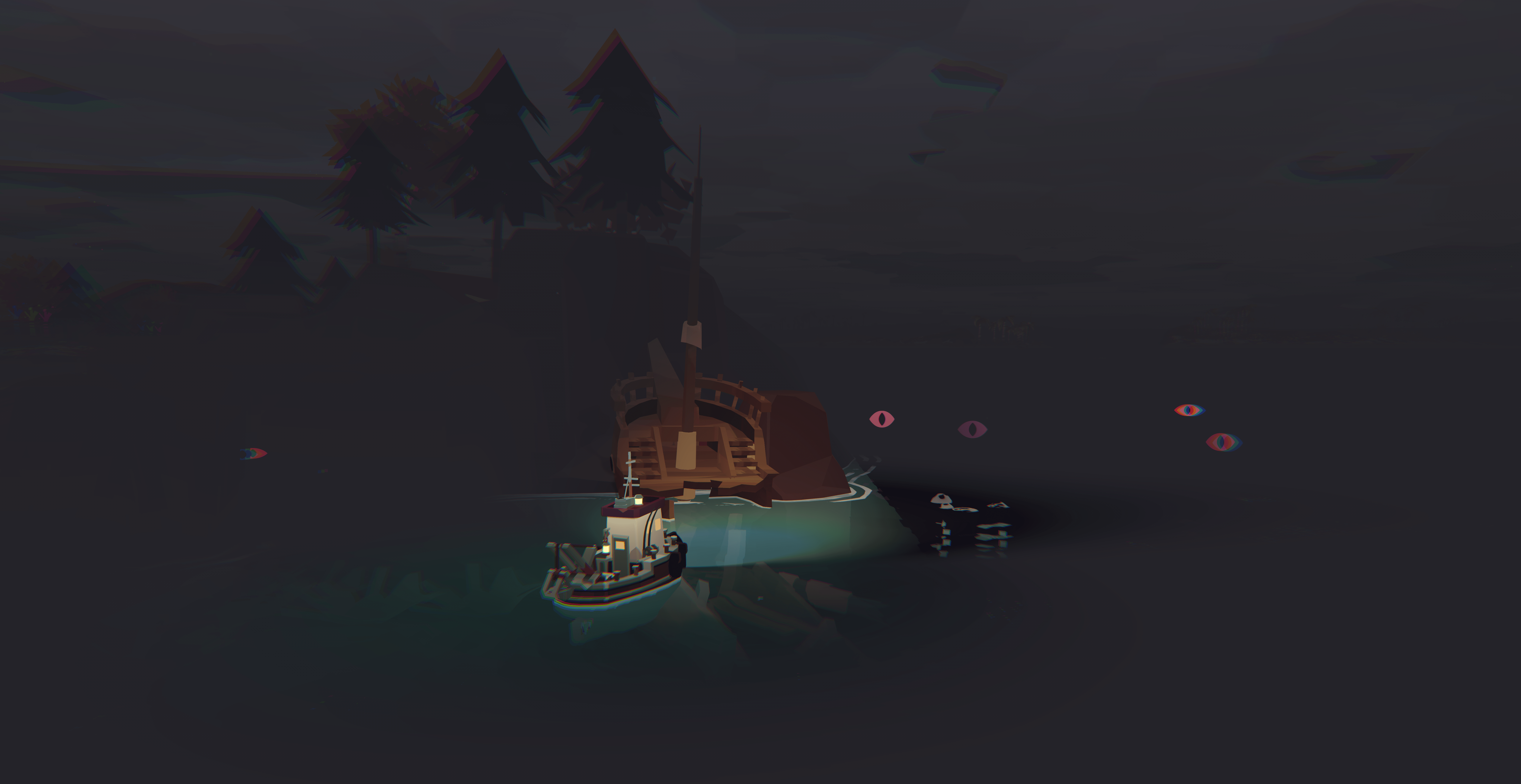
Honestly, I’d go mad too if I had to fish while sober.
The idea of “Cthulhu Fishing Game” might sound pretty strange at first brush, but Lovecraftian horror and the briny depths of the sea have always gone together like peanut butter and jelly. Look no further than the novella “The Shadow over Innsmouth” from the problematic man himself for the connective tissue. If game references are more your speed, that same novella was loosely adapted into Call of Cthulhu: Dark Corners of the Earth in 2005 and was also a partial inspiration for Bloodborne: The Old Hunter’s infamous Fishing Hamlet. Manga fans will recognize the connection from Junji Ito’s Gyo, with its nauseating depictions of human-fish body horror. Point of all this being, there’s something about the ocean that feels inextricably linked to madness.
Dredge then attempts to thread a needle through these thematic elements and the coziness of a fishing game. In Dredge, you take on the role of a lone fisherman in the early 20th century. After very little fanfare, you wind up shipwrecked in the small coastal town of Greater Marrow. The mayor lends you a new vessel and you begin using it to work your way back up — selling your daily catch to first pay back your debt and afterwards to begin upgrading your vessel. As things progress, however, you start hearing whispers from the locals about the dangers of venturing too far from port at night. At the same time, some of your catches start coming up to the surface…wrong. Some of the cod you haul aboard have a few too many heads and sometimes the crabs in your crab pots are wearing their brains on the outside. But hey, the fish monger pays you for them all the same — more money actually — so I guess everything is gucci?
The gameplay loop of Dredge is anchored to its accelerated day-night cycle. Fishing is generally fairly low stakes during the day — so long as you don’t allow your boat to careen into an outcrop of rocks. As the sun sets however, thick fog rolls in, reducing visibility down to just a few meters. Without powerful enough lights equipped to your boat, those rocky outcrops only render to the screen just moments before you are on top of them. Also working against you is the game’s Panic meter, represented by an eyeball at the top of the HUD that slowly opens before beginning to dart around frantically. The longer you spend out at night, the worse this effect gets, and the worse it gets, the more often you will experience Eternal Darkness-type sanity effects (think Amnesia: The Dark Descent for a more contemporary reference). Once in the Panicked state, the chromatic aberration gets cranked to 11, simulating the nauseating feeling of too little sleep on top of too much caffeine. Water spouts start forming freakishly close to you, seemingly magnetically attracted to your vessel. Swarms of crows hover overhead, excitedly cawing to one another at the prospect of stealing some of your hard-earned cargo. The only way to reduce this Panic effect is to wait things out until morning — at which point it will slowly dissipate — or to dock at one of the game’s various harbors and sleep it off.
The fishing itself is represented by a handful of straightforward timing minigames. The interesting part is how you stow your cargo. The inventory in Dredge uses the classic block-based matrix approach (think RE4, Apex Legends, or Escape From Tarkov), which is my personal favorite inventory system. The twist in Dredge is that your inventory matrix is the same shape as you vessel; you don’t have some nice 6×10 rectangle to work with. You also need to share certain tiles of your ship with your equipment — including rods, nets, lights, and engines. Want a faster ship? Well, that means less space for cargo. On top of the typical inventory Tetris, you also need to account for the fact that the game’s sea life aren’t all T and I blocks — rather, many of them are awkward shapes and sizes that can prove quite irksome to those of us on the OCD spectrum. It’s a really well thought out system that you figure out how best to optimize intuitively as you play. The game will subtly nudge you to the realization that many of the games weirdest fish shapes cleanly link up with other fish in the same biome, encouraging you to mix and match your haul instead of just spamming a single fish type. Oh yeah, and as your ship receives damage, certain boxes of the inventory matrix will become unusable, and any cargo that might have been already occupying that space will be lost overboard. So even you manage to pack your vessel perfectly with loot, you end up creating a situation where you’re gambling you aren’t going to hit anything on the way back to port. I love a game that has fun with its inventory, whatever that says about me, and Dredge has my favorite system of the entire year.
Perhaps the most refreshing element of Dredge however is that it resists letting each new mechanic become an albatross hung about the player’s neck. In your exploration, you may come across a piece of a treasure map, torn from a larger whole. If you’re so inclined, you can sniff around the surrounding area and discover the remaining pieces, aligning them to pinpoint the final resting place of a chest sunk beneath the waves. You might expect then, that in a game about exploring the high seas, for this mechanic to be repurposed numerous times over with a dozen or more map fragments scattered across the game world. You might expect that the treasure won’t spawn until you collect all the fragments, ensuring players follow the optimal sequence of events. You might even expect a tab in your quest journal, labeled “Sunken Treasures” or something like that, to track all the individual fragments you’ve come across during your adventure. And just like that, a moment meant to reward your curiosity and thorough exploration — a moment of intrigue and mystery — is reduced to a checklist.
Dredge resists this urge in commendable fashion. That treasure map, as fun as it is to seek out and solve, is the only one of its kind in the game. It isn’t tracked in any journal. And yes, you can find the treasure without ever locating even a single fragment of the map. There are plenty of other discoveries to be made as well, but I won’t delve too deeply into them all here — I don’t want to spoil everything. This is a game that invites its players to examine every inch of its map, trolling around the shoreline of every small landmass. It doesn’t give much in the way of map markers or waypoints either, instead allowing the player the ability to set pins on the map, Breath of the Wild style. Create your own system for what a fish pin or an anchor pin is meant to remind you of and mark up the map with them. Dredge is living proof that you don’t need dozens of collectibles or a map the size of a small country to make exploration feel meaningful.
By and large, Dredge achieves its twin goal of coziness and horror. It’s a game that I spent most of my time just vibing with, satisfied with its pleasant loop of seafaring, upgrading, and filling out a Pokédex of cosmic horrors. That said, there were certainly moments where I went a bit too far off-course and wound up clenching with my whole ass as I ran from some new, twisted nightmare. It’s these small bursts of fear in what is otherwise a fairly laid back experience that make Dredge such a unique blend, and it’s one I couldn’t put down until I had wrung it completely dry.
Continue reading defectivepixeltest