Boy, this list is late this year, huh? Well, first of all, I’d like to completely shirk any personal responsibility by complaining about how 2024 was a year featuring three (yes, 3!) 100+ hour RPGs that I ended up playing through. Kind of like complaining about just how great the weather is in the Bahamas, but alas. It’s not every year you have a backlog like that — actually, I’ve never had a backlog like that. So yeah, it took me a long time to get to most of the stuff I wanted to in order to assemble this list.
2024 was a strange year in that sense. It was a slow-ish year, coming down off the high that was 2023’s release calendar, albeit with some especially heavy hitters. Definitely lopsided for sure, but a year that had some truly incredible stuff that I won’t soon forget.
All that said, let’s get into my personal favorite games of the year.
Real quick, a couple disclaimers –
Quick obligatory notes:
- This is a ranked Top 10 list with 3 honorable mentions (unranked).
- Each game features a link to one of my favorite pieces of music from its soundtrack or to a clip of the game. Feel free to listen as you read.
- I consider the release timing of Early Access games based on when they exit Early Access, or enter V1.0.
- Remakes (which are becoming even more common these days) can be on my lists, but only if they are substantial enough in that the game is something fundamentally different. Examples of games I counted in 2019 were Pathologic 2 or Resident Evil 2. In 2020, I didn’t consider a game like Demon’s Souls (even though I loved it) because it is mostly a visual overhaul to the 2009 original game. Hopefully that distinction makes sense and isn’t just arbitrary to you.
Pile of Shame (games I didn’t have time to play):
- Astro Bot
- Helldivers 2 (I played this one, but not enough to have a fully formed opinion on it – sorry!)
- Hellblade: Senua’s Saga
- Factorio: Spae Age
Okay, with that out of the way, on to the list…
Honorable Mentions:
The Outlast Trials – Red Barrels

Hey, that’s my bad, y’all. I was just looking for the little boys’ room.
Let the Trials Begin – Tom Salta
When was the last time you played a mandatory tutorial level for a multiplayer game where you thought to yourself holy shit this is cool? For me, it was when starting The Outlast Trials for the first time. As a friend and I sat down to play together, we groaned at the idea of needing to finish a forced singleplayer level before we could get in a lobby together — that was, until we got into the thick of it. As we progressed through the fucked up house of horrors that kicks off the game, each at different intervals (his game had finished installing before mine), we kept yelling into our mics, our Discord user icons lighting up with each of us trading “holy fucks” back and forth. It was legitimately terrifying, and got us into the Halloween Spirit, big time.
Congratulating a game on a tutorial level might seem like a pretty backhanded compliment, but I’m being totally sincere. The fact that a sequence like that was so good when it didn’t have to be speaks to the level of care the team at Red Barrels has poured into practically every inch of this game. No detail is too small to be obsessed over. Just walk around the game’s elaborate multiplayer lobby, playing games of fully realized prison chess with your co-op partner, or enter a sensory bombardment chamber to participate in a Stroop Test together, breaking your brain while feeling like a lab rat.
Then there’s the core gameplay itself — a multiplayer PvE game with no combat, and very little options for fighting back. Part stealth game, part communal puzzle solving experience, and part group strategizing effort — I haven’t really played anything else like it. Not only that, but this is the rare multiplayer experience that remains scary in spite of everyone clowning around, throwing bottles like idiots and hiding in lockers right before the enemy enters the room. It’s all fun and games, until you’re the one the enemy is chasing around with a electric police baton.
The thing I like the most about the game, however, is its worldbuilding and vibe — The Outlast Trials takes the bits and pieces of lore established by the previous entries in the series and runs hog-wild with it, envisioning a savage version of the early 1960s where the most virulent, dogmatic tactics of anti-communism practiced by the US intelligence agencies were allowed to spin off into the dreaded morass of the private sector. The Murkoff Corporation — the Outlast series’ version of Umbrella Corp — is the kind of shadowy organization Allen Dulles would have been proud of. Imagine an alternate history where MKUltra had spawned an entirely new industry of human experimentation and supernatural research, the CIA had outsourced it to the highest bidder, and all the most extremist targets of Operation Paperclip were flown in to staff the place — and you’ve pretty got the ethos of Murkoff. The Outlast Trials walks a tightrope between conceivable, depraved reality and outlandish, over-the-top evil — the exact position where horror thrives.
The Outlast Trials is a horrifically unique game, hell bent on immersing you in total depravity. Give it a shot if you have some fellow sicko friends who fancy themselves horror aficionados; it’s worth experiencing its hellish world for yourself.
Crow Country – SFB Games
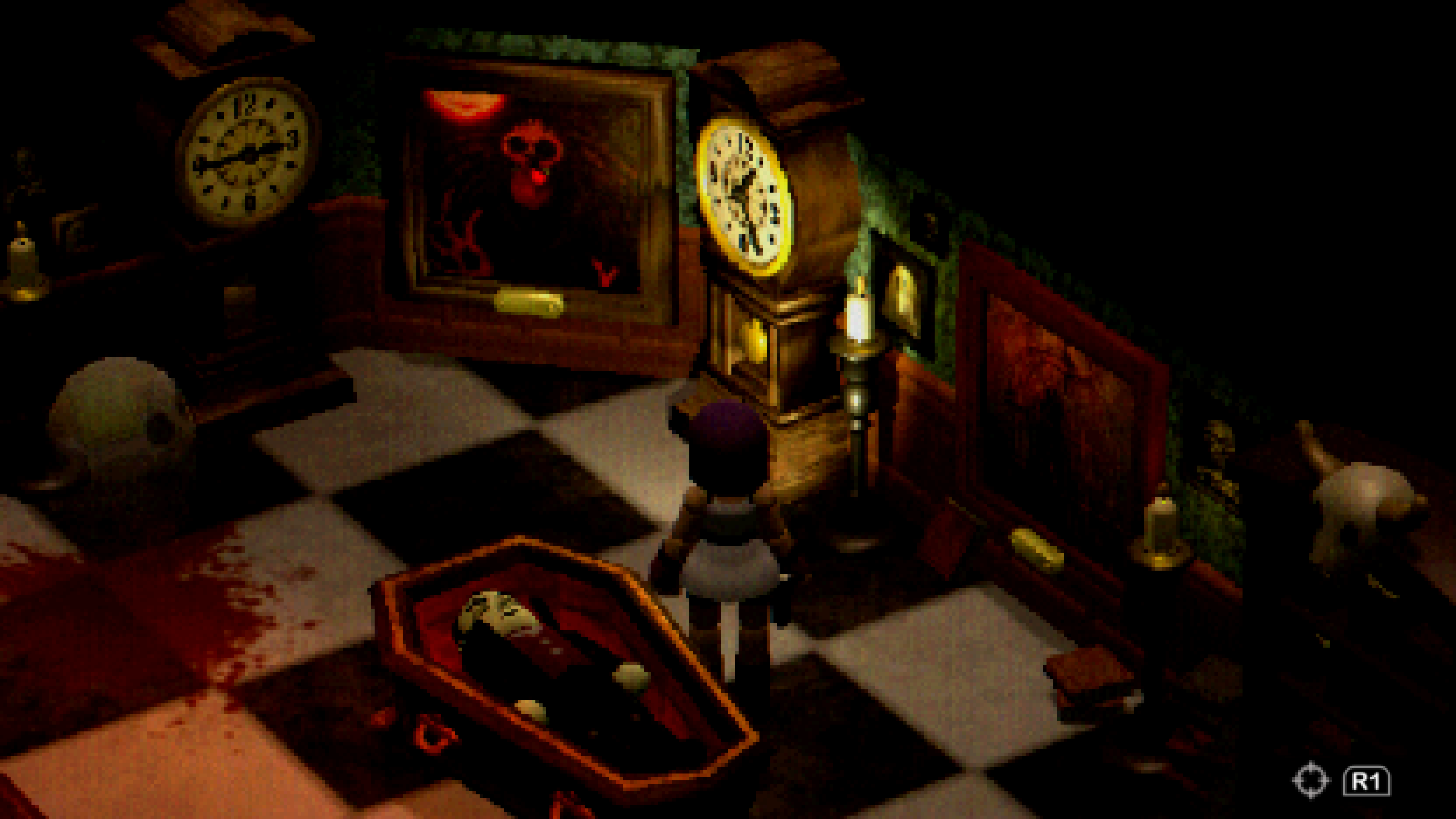
That art style is just *chef’s kiss*.
Fairytale Town – Ockeroid
Crow Country strikes the perfect balance between nostalgic trip down memory lane and invigorating original take on a classic genre. Its retro art style is immediately eye-catching — the low-poly art is impeccable, the CRT shader is so good that it’s like you’ve switched back to component cables — and yet, once you dig deeper, you’ll find it is more than just a pretty pixelated face. Its way of handling the camera is such a good idea that I can’t believe no one has tried it sooner — you can freely rotate it with the right stick, but the angle is so aggressively angled toward a top-down perspective that you still get some of the claustrophobic effect that old-school static camera angles provided. The left analog stick offers more modern movement, while the D-pad gives you access to good old tank controls — you know, for whenever you feel like playing the correct way.
The good ideas don’t stop there: Crow Country takes cues from southern gothic horror for its unique setting — an abandoned amusement park named for its owner, wealthy Atlanta land speculator Edward Crow. Not only are the vibes great — well, spooky — but it turns out that an abandoned amusement park makes for a great survival horror locale — each of the park’s different lands are visually distinct and easily navigable, while the various attractions make for an excellent narrative excuse to pack the place to the brim with intricate and off-the-wall puzzles. And, on top off all of that, the main character, Mara Forest, is everything you want from a horror protagonist — an unplaceable cocktail of wit, humor, eccentricity, and a not-so-clear backstory. Experiencing Crow Country’s wickedly smart puzzles with Mara’s musings to keep you company made for a great little survival horror package.
Indika – Odd-Meter
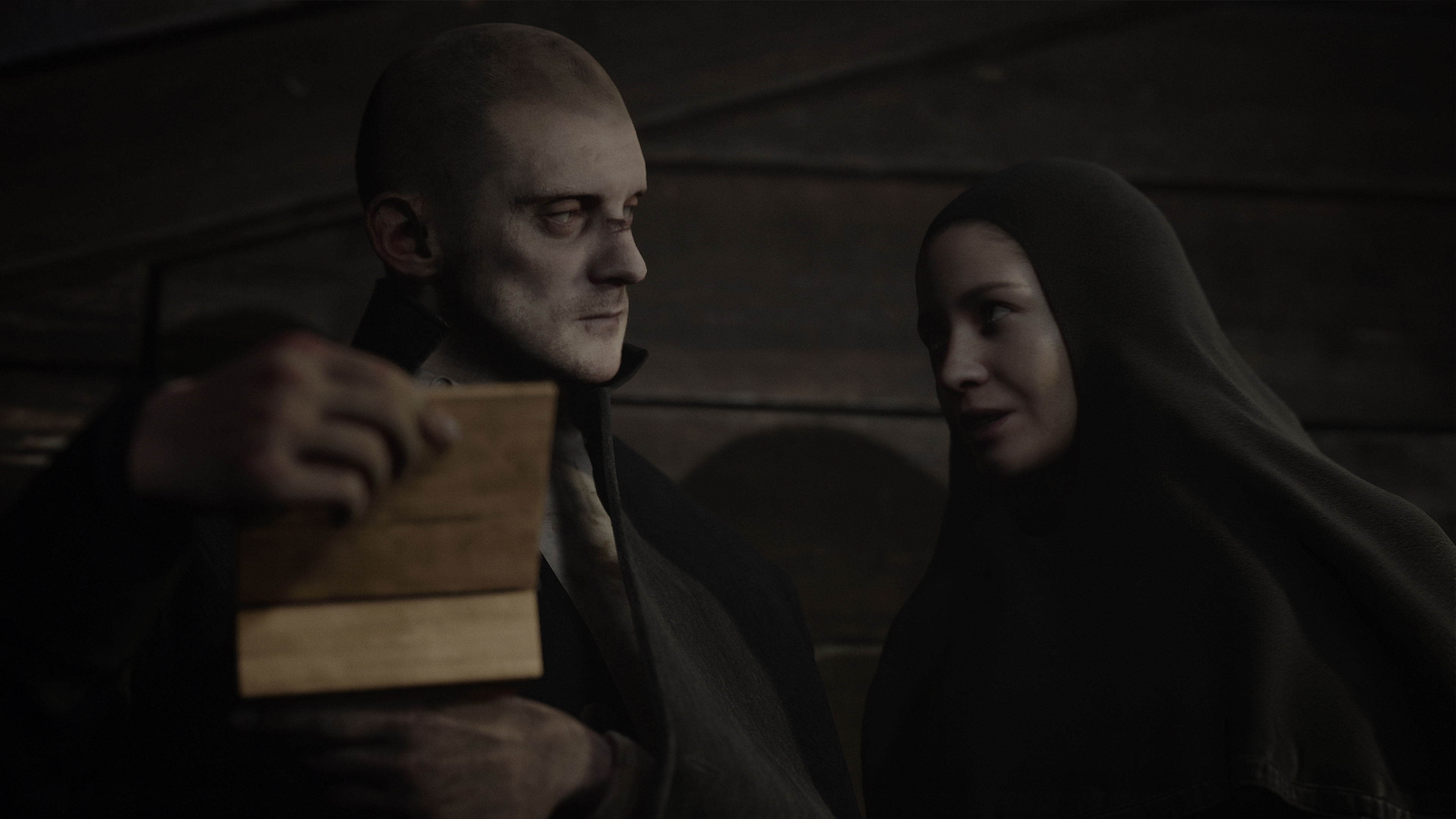
Indika is a blend of the mundane and the cosmically weird.
Joel – Mike Sabadash
I can all but guarantee, without even knowing who you are, dear reader, that you’ve never played a game quite like Indika. Equal parts experimental genre piece, interactive arthouse film, surreal Soviet-style comedy, and deeply personal crisis of faith, Indika is a fever-dream-with-a-heart-of-gold. You play as Indika herself, a nun in a Russian Orthodox convent who is shunned by her fellow Sisters in Christ, who believe her to be harboring the the voice of the devil. From the jump, everything in Indika’s world seems to be a contradiction. While she laboriously fetches 5 buckets of water from a well, there’s an always-visible point indicator at the top of the screen. After filling all 5 buckets worth of water, an elder nun spitefully pours it all out on the ground, at which point Indika “levels up”, rewarding her to pick a perk from a skill tree that only offers ways to increase her “Repentance”, “Grief”, or “Regret”. In the following scene, as Indika joins the other nuns in the chapel for prayer, she hallucinates a tiny, whimsically sized man, who jumps out of an elder nun’s mouth and begins dancing down the priest’s arms, grooving to what sounds to be late 90s era electronica.
In spite of how bizarre it is, Indika is a relatable story about a person harboring doubts about their faith in God. How can there be a just God when everything around us seems so random and devoid of meaning? The game’s core insight around a loss of faith is one that has stuck with me ever since I played it — Indika suggests that religion isn’t just about what you chose to believe in or philosophical quandaries about whether God does or does not, in fact, love you, but rather it is ultimately about how you see yourself and how you allow the world to see you. A religion that preaches original sin requires you to see yourself, first and foremost, as a sinner. What does a lifetime of thinking this way do to a person’s self-image? And how would it feel to suddenly be liberated from it?
For those interested in indie games with big ideas about life and the world, I can’t recommend Indika enough. It’s best to go into the experience as blind as possible, so I don’t plan on saying too much else — go experience it for yourself.
Continue reading defectivepixeltest