2015 was an incredible year for games. One of the best in quite a long time, in my opinion. As such, I want to dive straight into the list. Only a couple things up front:
- I chose three honorable mentions and then the proper top ten list.
- Each game features a link to one of my favorite pieces of music from their respective soundtracks for your listening.
- There were a number of games that I didn’t have the time and/or ability to get to. These are games that very likely could have made this list, had I played them. This year, they are:
Super Mario Maker
Splatoon
Axiom Verge
- While I try to avoid outright spoilers when possible in this Top 10 list, I still need to actually talk about some of these games, what makes them unique, and even some of the themes that run through them. If you want to play any games on this list completely blind, I suggest not reading my reasoning for their spot on the list.
Now, that being said, let’s move on…
Honorable mentions:
Ori and the Blind Forest – Moon Studios
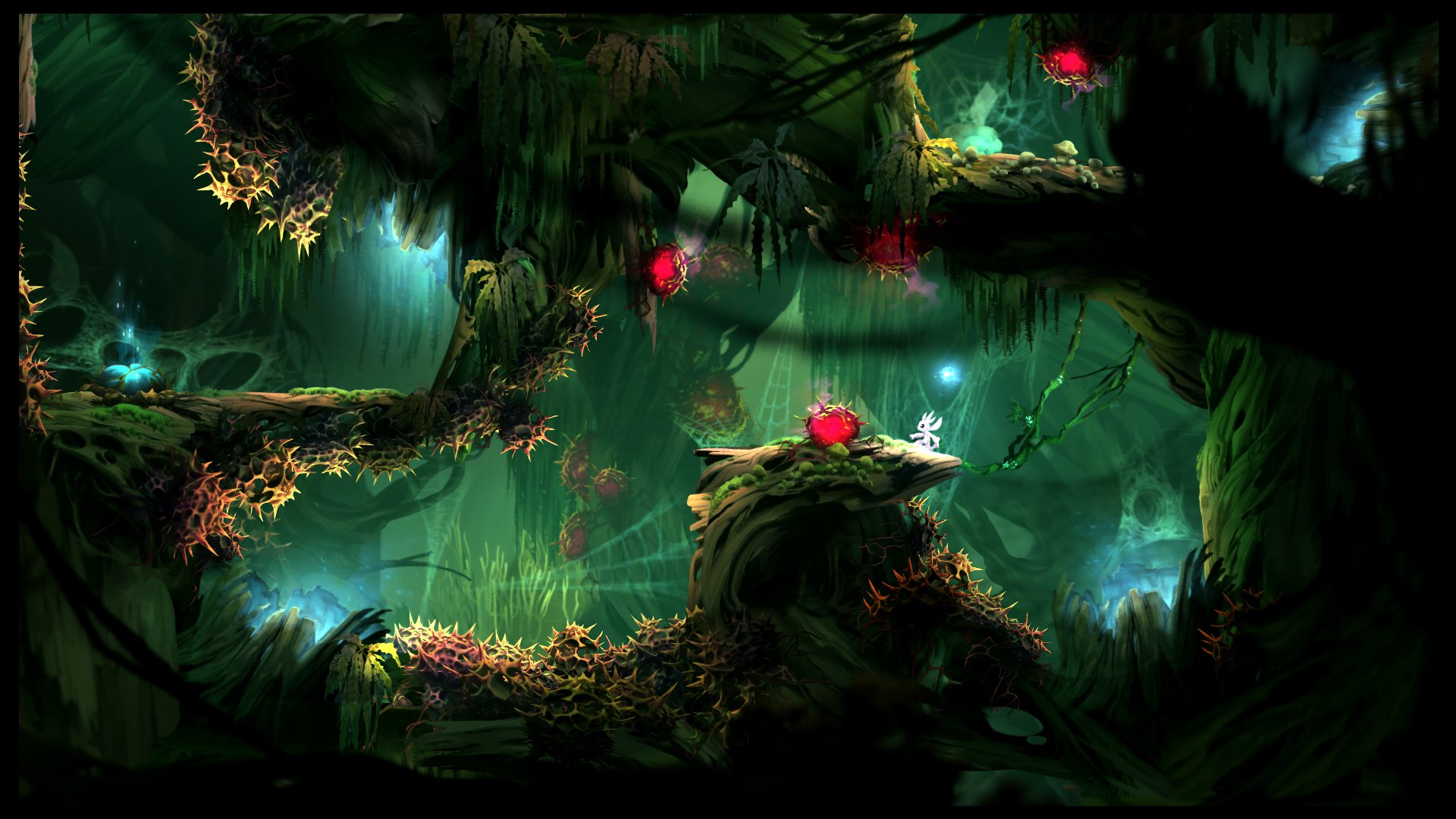
If there’s one thing to be said about Ori and the Blind Forest, it’s that it defies expectation. Don’t let its gorgeous art design and swooning score fool you, this is actually an immaculately designed Metroidvania that controls like a dream and will challenge the ever-loving hell out of you. I must have attempted that first escape sequence a hundred times, cursing my way through the entire thing. But when I finally made a successful run? Bliss.
Rise of the Tomb Raider – Crystal Dynamics

Of all the surprises in 2015, perhaps none was as personally shocking to me as how much I enjoyed Rise of the Tomb Raider. While 2013’s Tomb Raider reboot worked for some, I harbored a fairly significant resentment toward it. To me, it was horribly careless, a blunderbuss blast of a game which was trying really, really hard to be all things to all people, and not doing any one thing particularly well. That desperation frequently surfaced in the game’s awkward narrative, which presented a grand ambition for the Lara Croft character but only timidly inched toward it between woefully out-of-place third-rate Uncharted sequences.
But where that game struggled to find an identity, Rise of the Tomb Raider is shockingly confident. It relies much less on combat, instead turning its emphasis on exploring wider, open environments that make use of vertical space. Unlike its predecessor, it isn’t afraid of having longer stretches of quiet moments, with less overreliance on scripted moments. I also admire it for its commitment to a singular locale, as it significantly adds to that sense of excitement when you stumble across new places. And though we could make some qualms about “graphics don’t matter”, fuck that, because Rise of the Tomb Raider is drop-dead gorgeous, Xbox One hardware limitations be damned. And the experience of leaping, shooting, and raiding your way through its Siberian expanses is all the richer for it.
Now that it’s found its footing with the franchise, I’m excited to see what Crystal Dynamics does with Lara next.
Cibele – Star Maid Games

A lot of what’s been said about Cibele is how much of it is an autobiographical expression of its author, Nina Freeman, and how deeply personal it feels and how much it nails that culture of being deep into an MMORPG. And though all of that is certainly true, I find that those takeaways don’t quite give Cibele enough credit. For anyone who’s ever experienced the awkwardness of an online relationship, and all the timid flirting that eventually gives way to lusting, cringe-worthy conversation, this game is going to hit very close to home. There’s a lot to unpack in Cibele: about how first loves are often the most informative, about how the slow, almost tantric pace of online relationships can feel so exciting and then deflate so suddenly – as Cibele’s less-than-satisfying ending attempts to mirror, or even what it’s like to be a woman in a world of internet relationships. It’s the intense intimacy in Cibele, however, of everything right down to Nina actually playing herself in the game, that allows it to say so much in its brief 90-minute playtime. It’s in the game’s naked discomfort that we can find something of ourselves.
 defectivepixeltest