2020 really was a more innocent time. For last year’s list, I had this whole, cute little intro that I wrote. I still had a sense of humor about how bad everything was getting.
2021, the year, has taken a lot of that out of me.
So forget the intro this year. Why reflect on the year as a whole, when we all know it was a pretty bad one? Let’s talk about the games that came out this year, because some of those are actually pretty good.
Real quick, before I get into it –
Quick obligatory notes:
- This is a ranked Top 10 list with 3 honorable mentions (unranked).
- Each game features a link to one of my favorite pieces of music from its soundtrack. Feel free to listen as you read.
- I consider the release timing of Early Access games based on when they exit Early Access, or enter V1.0.
- Remakes (which are becoming even more common these days) can be on my lists, but only if they are substantial enough in that the game is something fundamentally different. Examples of games I counted in 2019 were Pathologic 2 or Resident Evil 2. In 2020, I didn’t consider a game like Demon’s Souls (even though I loved it) because it is mostly a visual overhaul to the 2009 original game. Hopefully that distinction makes sense and isn’t just arbitrary to you.
- I’m never able to get to all the games I’d like to by the end of the year. There are always ones that slip through the cracks. I typically like to list up front the games that I had the most interest in that I admittedly didn’t have time to get to. This year, my pile of shame is as follows:
Pile of Shame:
Eastward
Wildermyth
Bravely Default 2
Alien: Fireteam Elite
Persona 5 Strikers
Okay, with that out of the way, on to the list…
Honorable Mentions:
The Dark Pictures Anthology: House of Ashes – Supermassive Games
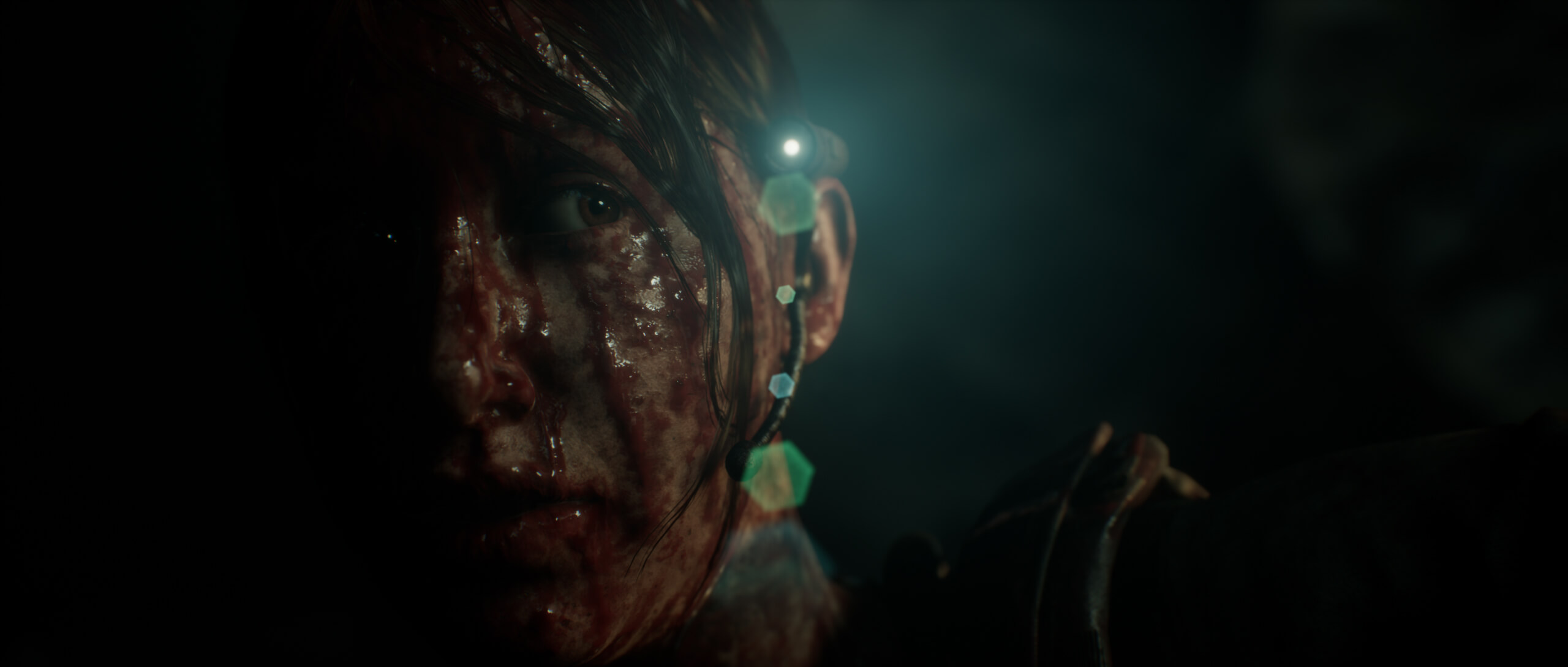
The brilliance of Until Dawn – Supermassive Games’ 2015 title for PS4 – was in the ways it toyed with genre conventions. By the time you got to the game’s fifth chapter, it had been riffing on elements of a teen slasher, a creature feature, a ghost story, a torture porn, and a serial killer mystery. There were references and tropes galore. But the big reveal later in the game was that only one of those was the “real” genre – or rather, only one of those perceived threats was the real one all along. It was a fun way to keep the player guessing, participating in the mystery, and in the dark about what could and couldn’t actually kill their playable characters.
Not to mention, unlike games like Heavy Rain, it never felt like you were getting “less” of the full story when one of your characters ended up biting the big one. It didn’t feel wrong when Emily died; it felt perfectly canonical to me. Because in horror movies, people die, and the story moves forward. As such, it made perfect sense to make a Quantic Dream-esque game set in the deepest of horror camp.
Supermassive’s big project since then has been an anthology series of games based around similar “Butterfly Effect”, decisions-with-far-reaching-consequences type gameplay. The Dark Pictures Anthology – as it’s called – has so far been an interesting project, but not one I would say has risen to the high bar that Until Dawn set for the studio. Each of the prior two installments – Man of Medan and Little Hope – have had their own unique problems, but they share a crucial one: the big twists in each have had a strange aversion to the supernatural or fictitious. Essentially, the big scary threat in both was simply all in the characters’ heads. This wasn’t necessarily a terrible idea, but it lacked the sort of punch that Until Dawn’s out-of-left-field creature reveal had.
After Little Hope, I began to worry that this was going to become the story formula for all future Dark Pictures games – as in, “don’t worry y’all, monsters aren’t actually real”. Well imagine my excitement then when House of Ashes gave me not only some honest-to-goodness cave-dwelling freakshows, but also a late-game genre changeup that I never saw coming.
House of Ashes follows a team of U.S. Marines during the invasion of Iraq in 2003, as they are hunting for weapons of mass destruction hidden in an Iraqi village. Unsurprisingly, they don’t find any (wow, just like real life!), and instead are met with a firefight with the Iraqi Army. The fighting gets a bit out of control, and the ground gives way around our main characters, who fall into an old cave system below the village. As they look for a way out, they discover they have actually stumbled onto a 4,000-year-old Akkadian ruin, as well as something a bit more sinister. Queue the horror trailer stinger.
House of Ashes wastes little time. The introduction to the characters is fast and quickly filled with drama – one marine is sleeping with the not-quite-so-ex-wife of another member of the group – and, once inside the cave system, it doesn’t take but a few minutes before the whole thing devolves into an absolute madhouse. The pacing of the game is quite good, leaving little downtime for things to get boring.
In addition, one of the best things Until Dawn did, that House of Ashes practically triples down on, is the length of time between player decisions and the consequences. Rather than the simplistic cause and effect of some other games, where the decision is immediately followed by the outcome, House of Ashes has you making seemingly immaterial decisions early on that come back into play in big ways later on. To me, that’s a much more interesting way to handle that type of decision-tree gameplay. It heightens the suspense while also making the replayability richer, since things are being set up and paid off across the whole storyline instead of just isolated moments.
Certainly, the best element of the Dark Pictures games has been the introduction of a co-op mode. Essentially, you and a friend will alternate control of different characters based on what the scene requires. So, in a scene where Eric and Rachel, the estranged husband and wife, explore a large antechamber, player 1 might control Rachel while player 2 controls Eric. Straightforward stuff. Where it gets interesting, however, is when characters start getting separated. At that point, you’ll have player 1 experiencing an entirely separate chapter with Rachel than what player 2 is experiencing with Eric and the other marines. And this plays out simultaneously. So, when your friend starts reacting to a jump scare in your Discord VC, you will have no idea what they’re seeing on their end. Conversely, you might be learning valuable information about the cave-dwelling creatures that you’ll want to verbally relay to your friend, so they aren’t operating on incomplete information. It’s very meta in that way, in that it makes you and your friend feel like two active participants in the horror film that’s playing out. It’s absolutely my recommended way to experience House of Ashes, as it adds a whole other layer of tension that wouldn’t be there otherwise.
I really don’t want to spoil the late-game stuff in House of Ashes here. Let’s just say that while the mid-game draws clear influence from 2005’s masterpiece horror film The Descent, the finale of the game goes for something just as clear, but a very different inspiration. The reveal had both myself and my friend I was playing co-op with asking each other where the hell this whole thing was going. It was one of my favorite gaming moments of 2021, one that reminded me of the first time I played Until Dawn and had both me and my friend down bad for the next Dark Pictures game. With House of Ashes, The Dark Pictures project has gone from kinda-mid to me to kinda-fire. October 2022 can’t come soon enough.
It Takes Two – Hazelight Studios

It Takes Two is the rare co-op game that is actually designed around being a cooperative experience. A lot of games just look at co-op as a mode – a nice way to enjoy single player content with a friend. Or to be a bit more generous, they might be balanced around having 2-4 players working together, but that just makes the shooting or whatever easier – nothing some bots and a single competent player couldn’t handle. It Takes Two, by contrast, is designed entirely around the idea of co-op, so much so that the entire game plays out in splitscreen, whether you’re on the same couch as your partner, or half the world away. Many puzzles require constant communication, patience, and a sense of empathy for what unique thing your partner is having to do. When it works it really works, and the gameplay serves as a bonding experience in its own kind of way.
When it comes to levels, It Takes Two has a creative energy to rival that of Super Mario Galaxy. Nearly every twenty minutes, time and time again, the game reinvents itself, throwing some totally new gameplay element at you and your partner. And just before things begin to drag or get boring, it’s onto some new high-concept idea, or some new miniaturized location – oftentimes both.
Early on, when Cody and May are shrunken down and navigating their own backyard shed, May gets a hammer and Cody gets a nail, and the Cody player will need to throw nails into walls, creating places for the May player to swing on. In another level, each player gets a magnet of a different polarity, and you’ll need to work together in a variety of push/pull fashions to get past obstacles. Then there’s an entire space level where one player has antigravity boots and the other can grow to massive size or shrink down to microscopic scale. The game is smart about things like that: typically it’s giving each player their own gameplay tool as opposed to having both players doing the same thing. It’s a good way to keep players reliant on one another, rather than the more skilled player simply progressing faster and waiting on their partner to play catch-up.
Unfortunately, while the individual game mechanics never stick around long enough to overstay their welcome, the same can’t really be said of Cody and May themselves. The game runs about 12 hours at a good pace – or 15 if you and your partner take things slow – and their schtick really begins to wear on your patience after that much time.
At the very beginning of It Takes Two, it’s established that Cody and May are planning on getting divorced. They waste little time in informing their young daughter, Rose, of the situation, and her sadness and confusion at this news creates the inciting action for the plot. It’s a pretty rare thing for a video game to depict the concept of divorce at all, and to combine that with a co-op game, where new partners will often bicker with one another as they each acclimatize to each other’s way of playing, is a pretty inspired choice. Early on, the character dialog between May and Cody often mirrored what my co-op partner and I were saying to each other in Discord. In this way, the idea itself is actually quite ingenious.
Where it begins to collapse, however, is in the mid to late game, when the game begins losing narrative focus. It can’t seem to decide whether it wants to be a getting back to together story or not, and because of this, the characters arbitrarily bounce back and forth between attempts at rekindling their feelings for each other and resuming their bickering ways. Normally, messy character arcs and clumsy storytelling are the kind of thing that are easy to forgive in games, but here, there isn’t a lot of momentum to pull you through the game otherwise. Since the game riffs on its gameplay elements so frequently, never letting one idea incubate for too long, it becomes incumbent on the story to keep you and your partner coming back for session after session until you beat the game. Sadly, once you start hunting for page fragments, the game just loses any and all urgency.
That said, It Takes Two is still a really special game, and one that I’m exceedingly glad got made. Josef Fares, the director of the game, has been working on really cool stuff for a while now – from Brothers: A Tale of Two Sons to A Way Out – and it’s great to see him and his team finally getting some major recognition for their work. It Takes Two has some of the most memorable moments I had with a game all year. That sequence with the Cutie the elephant alone is one of the most shocking things I’ve seen in a game in quite a while, and to witness that along with a friend is definitely an experience, to say the least. If you have a close friend to play It Takes Two with – especially one who is less familiar with games – it really will be an experience that neither of you will soon forget.
Hitman 3 – IO Interactive
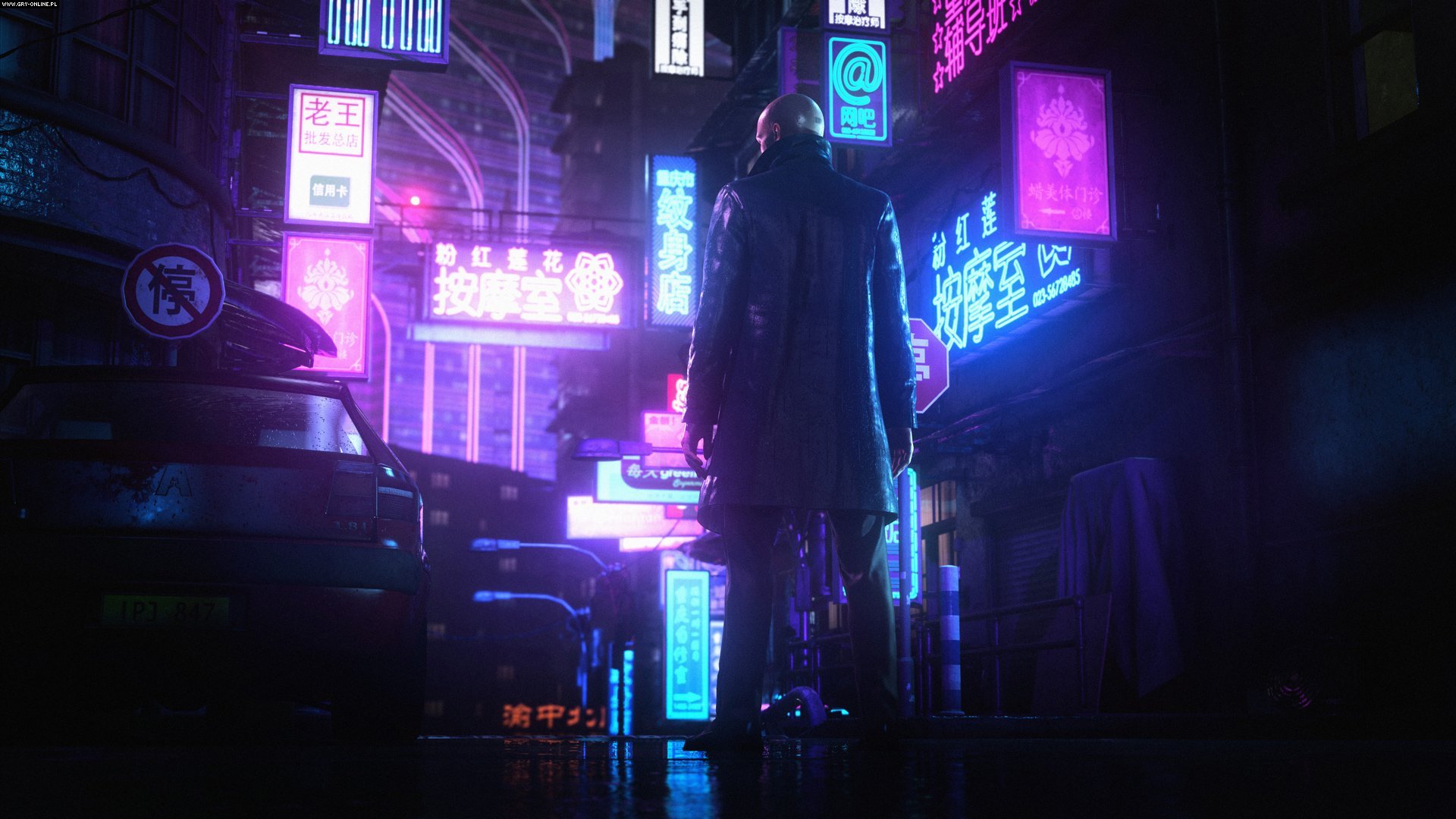
I just can’t quit you, Hitman. Though the high isn’t quite as potent the third time around, there’s no denying that the new iteration of Agent 47’s emetic poison-laced misadventures are some of most satisfying, clever, and out-and-out hilarious games of the last half-decade. Hitman 3 represents the culmination of a lot of ideas the developers at IO Interactive have been kicking around ever since that first Paris fashion show level all the way back when this series was supposed to be episodic (yeah, I forgot about that too). There’s a decent bit more experimentation with the formula this time around, and while not every new idea succeeds, this new collection of Hitman levels are by and large some of the most dense and intricate murder sandboxes the series has ever produced.
Let’s talk about levels. This time around, Agent 47’s digital tourism takes him to the opulent penthouse floors of a massive skyscraper in Dubai, a foggy English manor complete with Scooby-Doo-style secret rooms behind bookcases, an eccentric Berlin nightclub built out of der fonkybeatz and the concrete of a decommissioned nuclear plant, the rain drenched neon alleyways of Chongqing, and a sun washed wine estate in Argentina. The artistry for these locales is excellent, and just walking around and admiring the detail of them is quite enjoyable. From a design standpoint, the levels are a bit more focused overall than the labyrinthine maps of Hitman 2, although I admit to still having a bit of a soft spot for behemoths like the Santa Fortuna and Mumbai levels from that game. Instead of sprawl, here the levels are all about tightly packed density – seemingly no space is wasted in Hitman 3’s worlds of assassination.
Of the new ideas they experiment with, perhaps the one that works best is the Berlin nightclub level, in which Agent 47 is being hunted by 10 other assassins. There are no glowing red targets when things kick off – instead, you must be observant and search around for the disguised agents. The level, appropriately titled Apex Predator, is the only time in the entire series where you are given no Mission Stories, and are instead set loose on a very freeform manhunt. My first time playing through this mission, I wasn’t really a fan of this design, but I think this is the mission that benefits the most from subsequent playthroughs, and over time it became one of my personal favorites in the series.
Not to mention the level set in Chongqing, China, which is my personal favorite of the entire game. It’s the game’s most complex map, with layers and layers of verticality spanning high-rise apartments and hidden underground labs. And the whole level just has some extremely moody noir atmosphere to top it all off. It’s a level that I enjoyed every minute of being in.
It doesn’t all work, however. The final level is a very linear, very boring train map with no Mission Stories – something that worked for the Berlin mission’s unique structure but here just feels like a cop-out. I understand that the idea was to have a final mission to focus on the ending of the story, but the result just doesn’t work and it is by far the weakest level in the entire trilogy. It’s a shame the finale puts such a bad taste in your mouth, as the other five levels are so immaculately designed, but c’est la vie.
With Hitman 3 in the tank, I think it’s time for IO Interactive to let Agent 47 take a well-deserved sabbatical. While this game is a brilliant capstone to a trilogy of bangers, I think now would be the perfect opportunity for the developer to try something new. A team this talented almost certainly has a lot more ideas up its sleeve, and I want to see what else it’s capable of. Let our favorite barcoded agent take a bow. The encore can wait. After all, it’s always better to leave the people wanting more, wouldn’t you say, 47?
Continue reading defectivepixeltest