2016 was a really rough year for a lot of reasons, to a lot of people. It seems like reflection hasn’t been a particularly popular thing to do as we enter this new year, given how eager people are to see the previous year go. However, before 2016 gets written off completely, I want to be sure to reflect on the things from it that brought me joy. I feel it necessary.
I encourage anyone reading this to do their own positive reflection as well. That said, our media is a thing we can all share celebration of. Writing this list of videos games for 2016 has proved a strangely cathartic experience for me, if only because it forced me to think about the year in a manner that wasn’t extremely toxic.
To any that take the time to read some of it, you have my humblest thanks and my best wishes.
A few notes up top:
– I am again picking 3 honorable mentions first before proceeding with the full top 10 list.
– Each game features a link to one of my favorite pieces of music from its soundtrack. Feel free to listen as you read.
– Every year that I do this list, there are inevitably more and more games I don’t have time to get to. I try to list up front the ones I had the most interest in, but missed out on for one reason or another. This year, my regrets are as follows:
That Dragon, Cancer
Hyper Light Drifter
Oxenfree
Obduction
Now, with all that out of the way, let’s move on…
Honorable Mentions:
XCOM 2 – Firaxis Games
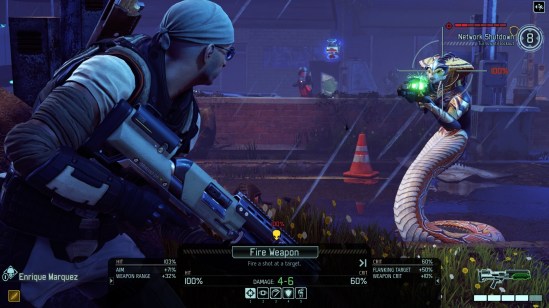
XCOM 2 kicked off 2016 right, all the back in January. This sequel to one of my favorite games of 2012 made lots of smart improvements to the core of XCOM, while still retaining the oppressive tone and beat-your-ass-into-the-ground difficulty I loved about Enemy Unknown.
Firstly, XCOM 2 adds a stealth mechanic, meaning that rather than constantly being on the defensive from alien ambushes, careful players who stick to cover can spring devastating traps of their own. This solves one of the biggest issues I had with the previous XCOM, which was that it often felt like you were walking into a hornet’s nest, hoping the first stings weren’t too bad. Here, some sense of tactical control is given back to players who know how to set up crossfires.
The addition of stealth is not a crutch, however. XCOM 2 is every bit as punishing as the previous game, if not more so. For starters, several missions here have strict turn timers for players to complete an objective and reach evac. Any soldiers that don’t make it to evac in time are dispassionately left behind. There’s little room for error in these missions, and the timers themselves require players to make riskier moves than they would otherwise make. In these missions, run-and-gun Rangers really shine as a class.
Yes, the artificial limits on number of turns allowed can feel pretty game-y, as there isn’t a ton of justification for why the dropship can’t wait on a soldier who missed getting aboard by one tile. But the way it alters the game dynamic for certain missions is worth the slight silliness it incurs along the way.
XCOM 2 was a fantastic strategy sequel, with smart improvements to character classes and mission structure that made for some of the most satisfying – and, of course, seriously brutal – moments of the year. The final mission of this game is a no-holds-barred gauntlet. For me, everything came down to a last ditch effort sniper shot aimed at the head of the final boss. When it connected, I was so surprised, I almost leapt out of my seat. How many strategy games can you say give you a reaction like that?
Dishonored 2 – Arkane Studios
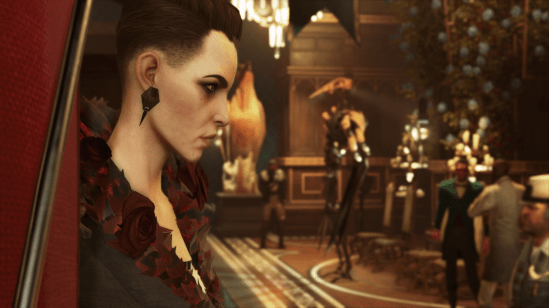
I thoroughly enjoyed the original Dishonored for being a modern spiritual successor to the hardcore first person stealth games of yore, such as the Thief series. The supernatural abilities that it gave players were brilliant in that they were designed to streamline the least interesting elements of stealth games. Rather than waiting for a patrolling guard to turn his back, simply teleport behind him. Rather than getting caught and sloppily fleeing from combat, simply freeze time momentarily while you slip back into the shadows.
All of that and more makes its way into Dishonored 2. The level design is sublime, with dozens of pathways and options for vertical traversal that reward experimentation and curiosity. Not only that, but entire optional objectives and mini-storylines dot the periphery of each level. From a design perspective, this is a seriously great sequel and one of the most impressive games of the year.
However, my primary issue with the original game still persists here. The world and characters, realized with as much gorgeous art design as they are, are just horribly dull and uninteresting. I normally wouldn’t take much issue with this, but given the sheer volume of lore and backstory that was written for and sprinkled into every nook and cranny of this game, the fact that so much of it feels lifeless is seriously disappointing.
Misgivings aside, skulking around the various manors, corridors, and streets of Dishonored 2 was some of the most fun I had playing a game in 2016. The Clockwork Mansion in particular was an amazing cross section of level design, world-building, and sheer creativity that took me by complete surprise. Had more of the game been infused with as much life and intrigue as that mission, this game might have placed much higher on my list.
The Last Guardian – Sony Interactive Entertainment & genDESIGN
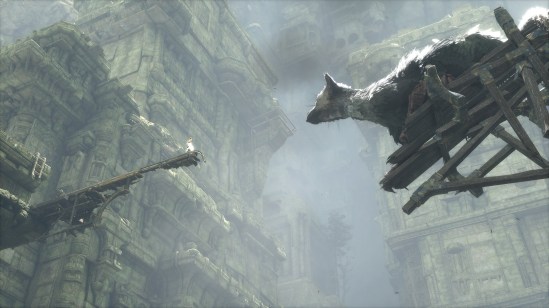
As I sit here to write this, it feels a little surreal. The Last Guardian is a game that I never thought I’d actually be able to play at all, much less be a game that I would enjoy so thoroughly. I remember being excited to finally get to play this way back in 2009. Since then, it’s become something of a running gag in the industry whether this thing was ever going to be released at all.
Well, at long last, here it is. Playing the final product, you’d be hard pressed to guess that this game has been trapped in development hell for years. The fact that The Last Guardian turned out as good as it did was one of the biggest surprises of the year.
The promise of an animal companion in a game that players would really, truly care about has been chased after for years, yet it’s never really been successful. The Last Guardian is the first game to finally realize that vision in a way that feels meaningful.
A lot of that starts with the way the game handles AI. Trico isn’t under direct player influence in the way that most AI companions are. He misbehaves, gets distracted, even outright ignores you, in much the same way that a wild animal might. In doing that, Trico can have one of two effects, depending on the player. For players with less patience and more calloused hearts, navigating an environment with Trico can become an enormously irritating task. However, I found myself, surprisingly early on, not thinking about Trico in terms of AI path-finding and what was and wasn’t a scripted moment, but rather as this dynamic and believable beast that I was interacting with. In its best moments, interactions with Trico were delightful, surprising, even terrifying.
In a year that seemed, at times, almost aggressively insincere, The Last Guardian was a breath of just the opposite. Despite all its development troubles, the final game is a triumphant, gorgeous, and ultimately deeply moving tale about a boy and a beast. It doesn’t have the haunting mystique of a game like Shadow of the Colossus, which is still certainly Ueda’s masterpiece, but it feels pure in what it is and uninterested in chasing that game’s long shadow.
It’s easily the most heartfelt game of 2016, and a clear reminder that Fumito Ueda is one of the most unique and necessary voices in the industry today.


 defectivepixeltest