2020 was a great year, with lots to do, places to go, and people to meet. If there’s one thing we can all agree on, it’s that 2020 was dope, and we can only hope that 2021 can be anywhere near as cool or memorable. However, supposing that you, for some reason, had a bad time in 2020 while all of your friends were out living it up, traveling to all the international cities you want to visit, and hooking up nonstop while you were at home playing Quiplash on Zoom with your family for the 18th time, then hey, at least you still have video games to make you feel better, right?
Well, sort of. 2020 was filled to the brim with disappointing games, games that were cool but ran like shit, games that were just pachinko machines dressed up to look like other video games, games that thought they were really smart and insightful but really were just didactic drivel with a hatred for their own characters and players, games that were Disney cash-grabs, and games that resented the notion that they need to entertain you in some way and couldn’t just focus on being the real them: a crypto-miner that installs itself on your PC.
But I mined the depths of the gaming-sphere this year in search of actual good shit, mostly because all the bars were closed but also because I had some time between my vacations to Tokyo and London, and figured I might as well write 10,000 words about my hobby so that I could kill time on the plane. Def real shit.
Quick obligatory notes:
- This is a ranked Top 10 list with 3 honorable mentions (unranked).
- Each game features a link to one of my favorite pieces of music from its soundtrack. Feel free to listen as you read.
- I consider the release timing of Early Access games based on when they exit Early Access, or enter V1.0.
- Remakes (which are becoming even more common these days) can be on my lists, but only if they are substantial enough in that the game is something fundamentally different. Examples of games I counted last year were Pathologic 2 or Resident Evil 2. This year, I didn’t consider a game like Demon’s Souls (even though I loved it) because it is mostly a visual overhaul to the 2009 original game. Hopefully that distinction makes sense and isn’t just arbitrary to you.
- I’m never able to get to all the games I’d like to by the end of the year. There are always ones that slip through the cracks. I typically like to list up front the games that I had the most interest in that I admittedly didn’t have time to get to. This year, my pile of shame is as follows:
The Pathless
Twin Mirror
Immortals Fenyx Rising
Now, on to the list…
Honorable Mentions:
Animal Crossing: New Horizons – Nintendo EPD
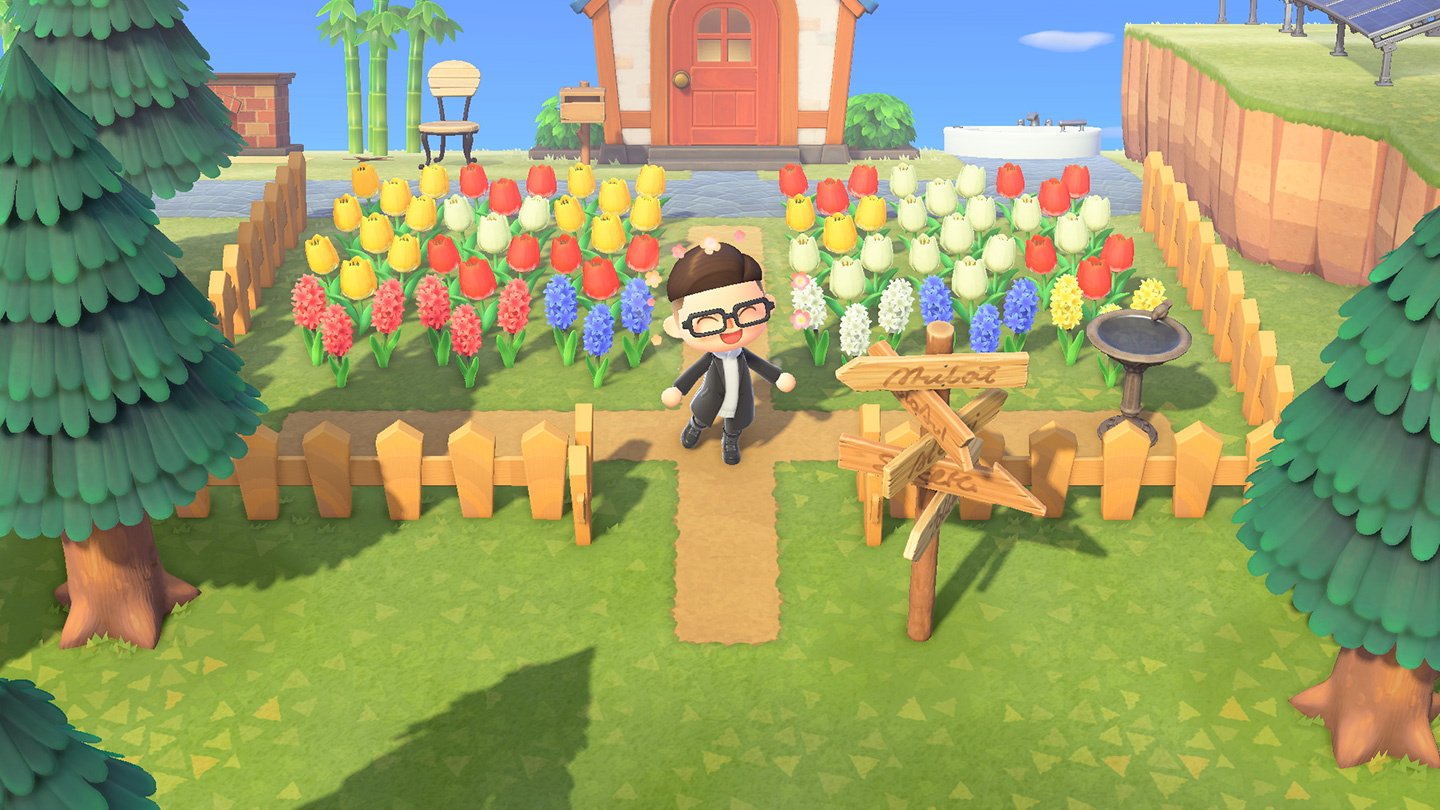
There were a lot of good reasons to be conspiratorial in 2020. It’s not every year that a worldwide pandemic breaks out and the entire government apparatus trips over itself in a rush to make large corporations and Wall Street speculators whole. There were, of course, a lot of bad reasons to be conspiratorial too, but I’m sure that goes without saying. But here’s the best reason to be conspiratorial – in June of 2019, Nintendo delayed their new Animal Crossing game into March of 2020. That’s riiiight as the first wave of lockdowns were happening in the Western world. Color me a bit skeptical that they didn’t know that millions of people would be at home and needing some wholesome escapism.
But it wasn’t all just good timing. There were a lot of welcome changes to the series too. For New Horizons, the series dons a Casual Friday Hawaiian shirt, becoming much more chill-vibes when it comes to allowing its players to tweak their own personal animal forest. Instead of letting new neighbors move in wherever they want, air-dropping their domiciles in shock-and-awe campaigns against your perfectly curated garden of golden roses, Tom Nook finally allows you to be the zoning coordinator for your island community. Nothing gets built without your explicit permission. Even the landscape itself is just, like, a suggestion, man. If you don’t like the energy that a certain river is giving off, just you know, turn it into land. And if you decide that the town museum would look way more feng shui on top of a mountain, that’s actually extremely cool with Blathers.
I for one really appreciate when a series as conservative as Animal Crossing can pack up the beach chair, grab a tall glass of vacation juice, and just vibe. 2020 was a year of extremely bad vibes, and despite Nintendo’s definitely-super-real conspiracy to release the game alongside a pandemic, ACNH did provide a way for everyone to socialize with their friends and do some light gambling on stalks while we waited for the bad vibe storm to blow over. Okay, maybe it’s been almost a year now and we’re still not seeing the light at the end of the tunnel, but hey, these were more innocent times. Just listen to that 5:00AM theme, ya?
Visage – SadSquare Studio
Probably the most tragic thing in the past decade of the games industry was the killing of the Silent Hills project. P.T., the brief glimpse we got of Hideo Kojima’s vision for the future of survival horror, spread through the imaginations of people everywhere like wildfire. It didn’t take long for a litany of copy-cat games to begin development. To this day, I don’t think I’ve ever seen a cancelled game that was so influential.
While there have been plenty of me-too attempts to recapture the magic of P.T., none of them have quite worked for me. That is, none of them until the early-access game Visage dropped onto my radar. It finally released in full in 2020, and gave me more than my year’s supply of screams in the process.
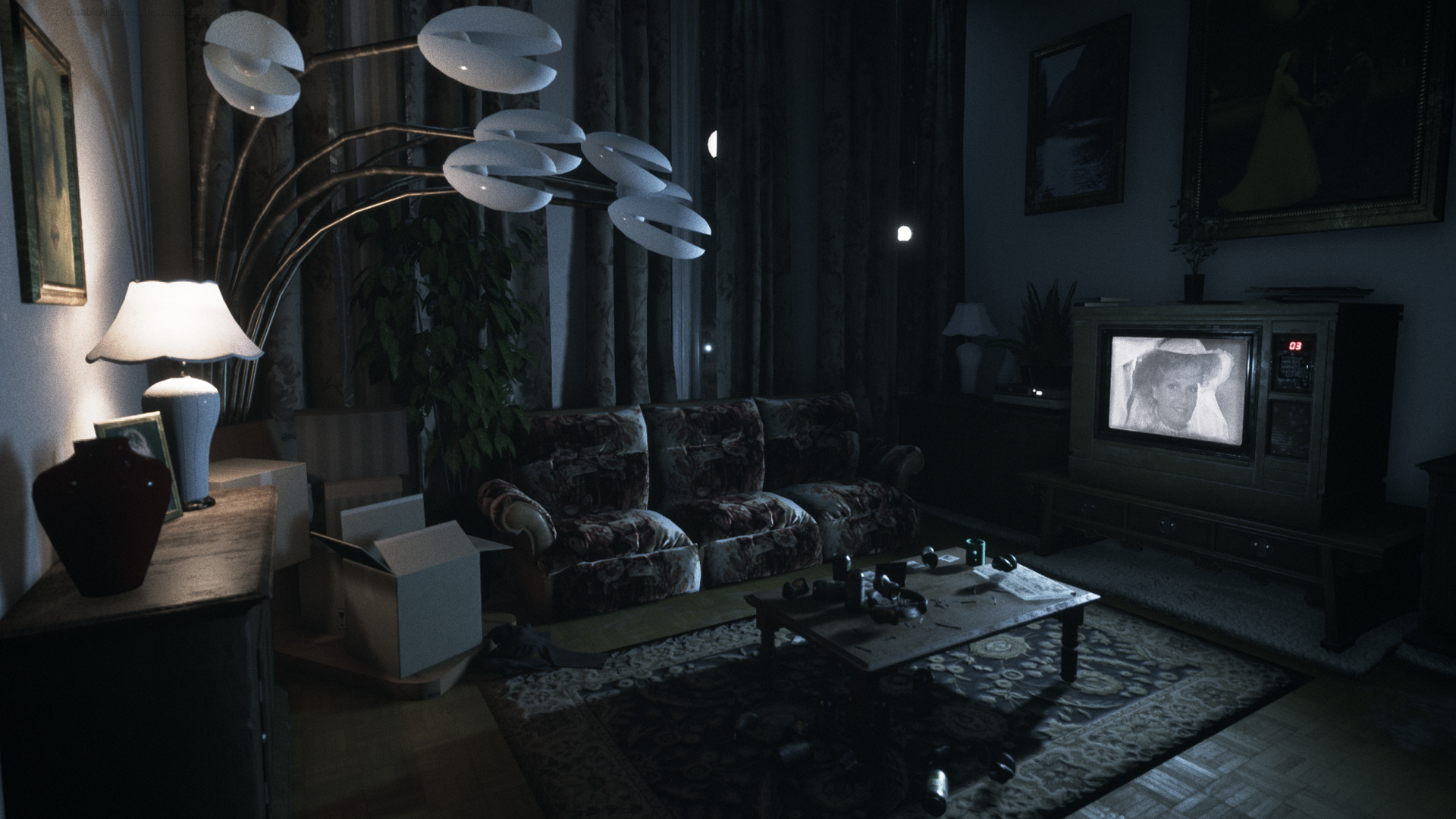
The premise of Visage isn’t anything novel. You’re trapped in a house with the vengeful spirits of those who lived there before haunting you. There’s a sanity mechanic where, if you stay in the dark too long, you will begin experiencing more and more spooky shit. The path to progress the game is very much like P.T. – intentionally obtuse and occasionally frustrating. Yes, there’s an old lady ghost, a creepy little girl ghost, and her imaginary friend she’s communicating with (think The Babadook). Even the architecture of the house is strikingly similar to the house from P.T. And the controls? Don’t get me started on how jacked up the controls are in this game.
But here’s the thing. Visage is scary. Like, really fucking scary. It doesn’t give a shit whether you can handle it or not. You agreed to be scared when you launched the game, and Visage knows what its one fucking job is.
First off, the imagery in this game is uncanny in ways that almost no other horror game has been for me. There’s a certain type of horror film, where, after you walk out of the theater to head home for the night, it can be hard to unsee a particular frame. Get in your car, check the backseat, you’re still thinking about it. Go home, close your eyes to go to sleep, and you still see it. That leave-a-light-on, don’t-let-your-mind-wander shit. That never really happens for me with video games. Horror games, in my experience, can be more intense in the moment than a horror film, but they don’t have that staying power. You can be scared shitless while playing them, but turn them off and it’s over. Have a good rest of your night.
Visage, on the other hand, fucking stayed with me. The lighting in the game is so good that it makes you nervous about every dark corner. The game gives you candles to light your way, but those are a limited resource that you’ll eventually run out of. The backup? The game gives you a handheld camera and you can use its flash to see where you’re going when you’re out of other options. That either already sounds like nightmare fuel to you, or you just need to get to the first time you flash a pitch-black corridor to reveal a ghost girl coming toward you with a syringe in her hand. Yeah, good luck unseeing that one.
Then there’s the game’s sound design, which is unpleasant in a way that’s hard to put into words. Sometimes it’s nails-on-a-fucking-chalkboard, running straight down your spine, and sometimes it’s just so fucking quiet. The quiet is what really worms its way into your amygdala. Because things are never actually silent in Visage. There’s always something happening in the sound mix, whether it’s the subtle hum of the house’s HVAC system, the droning of a lightbulb, the pained creaking of the old house itself, the tick-tick-ticking of an old grandfather clock, or just the pitter-patter of rain beading up on the windows. You likely won’t even be conscious to its effect on you while you play, but after enough time, even the most mundane rooms of the house will just feel off.
Visage is a game that’s hard to play. Both because of those controls I alluded to before, but also because it’s just so effective at what it does. Is it my favorite horror game I’ve ever played? No. Is it the scariest horror game I’ve ever played? Probably.
Resident Evil 3 – Capcom

Mr. X was one of my favorite concepts from any game in 2019. The idea of a relentless pursuer enemy that you can’t kill no matter how hard you try is just fantastic horror. 2014’s masterful Alien: Isolation is still probably the gold standard of how to do this, but in that game’s case, the entire experience was designed around the Xenomorph. Resident Evil 2’s remake, on the other hand, used Mr. X as a sort of complicating factor in a game that already had plenty of other threats to juggle. The best moments in that game were when you were busy trying to dodge a zombie bite while remaining juuuust quiet enough so as not to alert a nearby Licker, and then Boom!, that fedora-wearing asshole opens the door at the far end of the hallway – the one that was supposed to be your escape route.
After experiencing moments like that, it was hard not to think ahead to the next game from the series – the 1999 Resident Evil 3 – and its titular villain, Nemesis. The prospect of remaking that game next, complete with a modified Mr. X AI system, was immediately thrilling. Turns out that Capcom was way ahead of us. In a move that echoed the time between the original PS1 classics, Resident Evil 3’s remake dropped one short year later.
And while the game that we got felt like a missed opportunity to take more creative liberties, open up the scope to a larger city-scale, and to make Nemesis a constant threat, the end result was still an absolute blast of a game that I played through over and over in 2020.
With Resident Evil 3, Capcom chose to stick closer to the tone of the original game – namely, a tighter, more action-driven experience than RE1 or RE2. This game wastes zero time in setting things in motion, with the Nemesis quite literally busting through Jill Valentine’s apartment wall within the first 5 minutes. This intro sets the stage quite well for the pace of the game to follow, which is a mad dash to get out of Raccoon City.
I think they push a bit too far in this direction, cutting back on the winding, puzzle box level design that made RE2’s RPD so special. However, while it may be a step back in terms of map design, RE3 features significantly better boss encounters, a delightfully playful script and some excellent voice talent who really sell it, tighter combat thanks to the inclusion of a an immensely satisfying dodge move, varied encounter design with no one thing overstaying its welcome, and not to mention Nemesis – who, while most of the time is too tightly scripted and underused, is in fact, quite scary when he suddenly appears and rushes you down.
The experience itself is brief, with the game lasting only maybe 6 hours for an initial run. But I was never bored by the game, a compliment I can’t necessarily extend to last year’s RE2. While the RPD was phenomenal, S-tier level shit, the back half of that game could really drag, in keeping with franchise tradition. Resident Evil 3 is one of the only RE games I’ve played that didn’t start spinning its wheels by the final hours, and that was really refreshing to see.
So despite the shortened playtime, I probably sank 30 hours into RE3, speedrunning it again and again on various difficulties, with different modifiers, etc. It gets to be quite the challenge, but the game moves at the pace you set – get brave enough with that dodge and you can bypass tricky situations in a flash.
For me, Capcom’s renaissance has been one of the most exciting things happening in the games industry. It’s been such a joy to see Resident Evil, a franchise I’ve loved for a long while, back from near-irrelevance. If RE3 is to be considered one franchise’s “missteps”, then consider me excited as hell for the future.
Continue reading
 defectivepixeltest