2016 was a really rough year for a lot of reasons, to a lot of people. It seems like reflection hasn’t been a particularly popular thing to do as we enter this new year, given how eager people are to see the previous year go. However, before 2016 gets written off completely, I want to be sure to reflect on the things from it that brought me joy. I feel it necessary.
I encourage anyone reading this to do their own positive reflection as well. That said, our media is a thing we can all share celebration of. Writing this list of videos games for 2016 has proved a strangely cathartic experience for me, if only because it forced me to think about the year in a manner that wasn’t extremely toxic.
To any that take the time to read some of it, you have my humblest thanks and my best wishes.
A few notes up top:
– I am again picking 3 honorable mentions first before proceeding with the full top 10 list.
– Each game features a link to one of my favorite pieces of music from its soundtrack. Feel free to listen as you read.
– Every year that I do this list, there are inevitably more and more games I don’t have time to get to. I try to list up front the ones I had the most interest in, but missed out on for one reason or another. This year, my regrets are as follows:
That Dragon, Cancer
Hyper Light Drifter
Oxenfree
Obduction
Now, with all that out of the way, let’s move on…
Honorable Mentions:
XCOM 2 – Firaxis Games
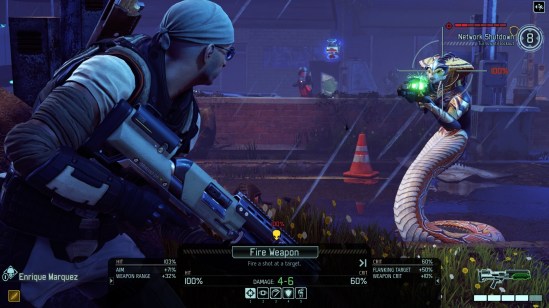
XCOM 2 kicked off 2016 right, all the back in January. This sequel to one of my favorite games of 2012 made lots of smart improvements to the core of XCOM, while still retaining the oppressive tone and beat-your-ass-into-the-ground difficulty I loved about Enemy Unknown.
Firstly, XCOM 2 adds a stealth mechanic, meaning that rather than constantly being on the defensive from alien ambushes, careful players who stick to cover can spring devastating traps of their own. This solves one of the biggest issues I had with the previous XCOM, which was that it often felt like you were walking into a hornet’s nest, hoping the first stings weren’t too bad. Here, some sense of tactical control is given back to players who know how to set up crossfires.
The addition of stealth is not a crutch, however. XCOM 2 is every bit as punishing as the previous game, if not more so. For starters, several missions here have strict turn timers for players to complete an objective and reach evac. Any soldiers that don’t make it to evac in time are dispassionately left behind. There’s little room for error in these missions, and the timers themselves require players to make riskier moves than they would otherwise make. In these missions, run-and-gun Rangers really shine as a class.
Yes, the artificial limits on number of turns allowed can feel pretty game-y, as there isn’t a ton of justification for why the dropship can’t wait on a soldier who missed getting aboard by one tile. But the way it alters the game dynamic for certain missions is worth the slight silliness it incurs along the way.
XCOM 2 was a fantastic strategy sequel, with smart improvements to character classes and mission structure that made for some of the most satisfying – and, of course, seriously brutal – moments of the year. The final mission of this game is a no-holds-barred gauntlet. For me, everything came down to a last ditch effort sniper shot aimed at the head of the final boss. When it connected, I was so surprised, I almost leapt out of my seat. How many strategy games can you say give you a reaction like that?
Dishonored 2 – Arkane Studios
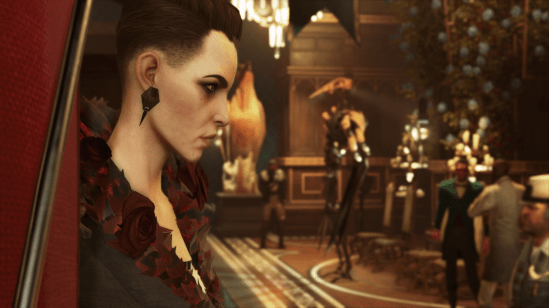
I thoroughly enjoyed the original Dishonored for being a modern spiritual successor to the hardcore first person stealth games of yore, such as the Thief series. The supernatural abilities that it gave players were brilliant in that they were designed to streamline the least interesting elements of stealth games. Rather than waiting for a patrolling guard to turn his back, simply teleport behind him. Rather than getting caught and sloppily fleeing from combat, simply freeze time momentarily while you slip back into the shadows.
All of that and more makes its way into Dishonored 2. The level design is sublime, with dozens of pathways and options for vertical traversal that reward experimentation and curiosity. Not only that, but entire optional objectives and mini-storylines dot the periphery of each level. From a design perspective, this is a seriously great sequel and one of the most impressive games of the year.
However, my primary issue with the original game still persists here. The world and characters, realized with as much gorgeous art design as they are, are just horribly dull and uninteresting. I normally wouldn’t take much issue with this, but given the sheer volume of lore and backstory that was written for and sprinkled into every nook and cranny of this game, the fact that so much of it feels lifeless is seriously disappointing.
Misgivings aside, skulking around the various manors, corridors, and streets of Dishonored 2 was some of the most fun I had playing a game in 2016. The Clockwork Mansion in particular was an amazing cross section of level design, world-building, and sheer creativity that took me by complete surprise. Had more of the game been infused with as much life and intrigue as that mission, this game might have placed much higher on my list.
The Last Guardian – Sony Interactive Entertainment & genDESIGN
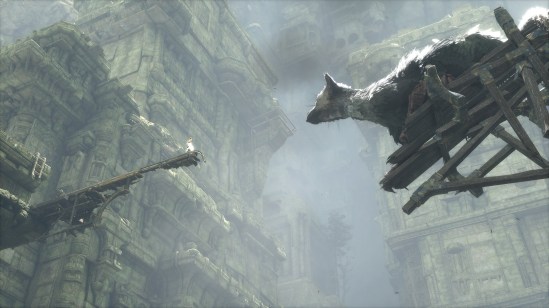
As I sit here to write this, it feels a little surreal. The Last Guardian is a game that I never thought I’d actually be able to play at all, much less be a game that I would enjoy so thoroughly. I remember being excited to finally get to play this way back in 2009. Since then, it’s become something of a running gag in the industry whether this thing was ever going to be released at all.
Well, at long last, here it is. Playing the final product, you’d be hard pressed to guess that this game has been trapped in development hell for years. The fact that The Last Guardian turned out as good as it did was one of the biggest surprises of the year.
The promise of an animal companion in a game that players would really, truly care about has been chased after for years, yet it’s never really been successful. The Last Guardian is the first game to finally realize that vision in a way that feels meaningful.
A lot of that starts with the way the game handles AI. Trico isn’t under direct player influence in the way that most AI companions are. He misbehaves, gets distracted, even outright ignores you, in much the same way that a wild animal might. In doing that, Trico can have one of two effects, depending on the player. For players with less patience and more calloused hearts, navigating an environment with Trico can become an enormously irritating task. However, I found myself, surprisingly early on, not thinking about Trico in terms of AI path-finding and what was and wasn’t a scripted moment, but rather as this dynamic and believable beast that I was interacting with. In its best moments, interactions with Trico were delightful, surprising, even terrifying.
In a year that seemed, at times, almost aggressively insincere, The Last Guardian was a breath of just the opposite. Despite all its development troubles, the final game is a triumphant, gorgeous, and ultimately deeply moving tale about a boy and a beast. It doesn’t have the haunting mystique of a game like Shadow of the Colossus, which is still certainly Ueda’s masterpiece, but it feels pure in what it is and uninterested in chasing that game’s long shadow.
It’s easily the most heartfelt game of 2016, and a clear reminder that Fumito Ueda is one of the most unique and necessary voices in the industry today.
Top 10:
10. Dark Souls III – FromSoftware
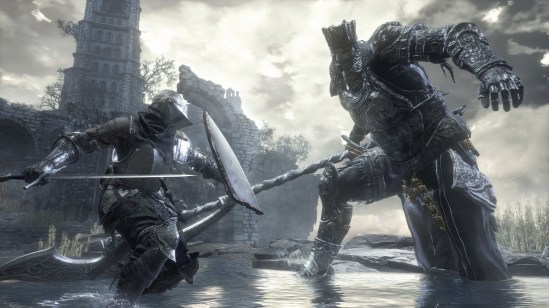
As a recent convert to the “Souls games” (last year’s Bloodborne finally won me over), I went into the finale of the Dark Souls trilogy not quite knowing what to expect. What I found here was one of the most demanding and rewarding games of 2016.
So much of what makes this game special is communicated in its level design. There is a small moment, about halfway through the game, that really struck me, maybe even more than it should have. So, if you’ll indulge me for a moment…
Amid the toxic swamp surrounding Farron Keep is an inconspicuous ladder leading to balcony midway up a massive stone bridge pylon. From here, the player can actually walk all the way around the structure, seeing above the swamp tree-line, to get their bearings as well as spot the smoking pyres they are meant to extinguish (the objective of this area). The game doesn’t announce that this area can be used for such a purpose; it’s just there, communicated organically.
From this same overlook, the player can ride an elevator the rest of the way up the pylon and onto the bridge itself. Without much clear fanfare, a mini-boss fight with a golem ensues. If the player defeats this golem, and is very attentive, they will notice a small ledge allowing them to continue further along the bridge. They will then find the next section destroyed, with the corpse of a dragon having crashed into it.
Here, there’s some great loot available, but also a seriously cool revelation. If the player gazes up, they might notice that this partially destroyed bridge is the same from the Undead Village, 2-3 levels back. Just across the gap is the place where the player met the disfigured, monk-like Yoel of Londor hours ago.
It’s the small details like this, and the way that Dark Souls III doesn’t much care if a majority of its player base misses them, that make this game just so damn cool. It is design that respects the player, that isn’t afraid to hide (actually hide) its secrets, and that doles out information(including its surprisingly complex lore) in drip-feed fashion.
Now add in the stunning visual design (courtesy of the Bloodborne engine), a bit more forgiving bonfire checkpoint placement, and some seriously memorable boss encounters, and you’ve got yourself one hell of a video game.
9. Stardew Valley – ConcernedApe

Before actually playing it, the last game I would have expected to make this list was Eric Barone’s Stardew Valley. And yet, here we are. This game is primarily a spiritual successor to the Harvest Moon games (circa SNES era), but with some Animal Crossing zest and perhaps a garnish of Minecraft.
We could go down the list here: Stardew Valley has farming, fishing, mining, spelunking, crafting, and socializing, but it is so much more than the sum of its parts. A lot of what makes it so special is that in spite of its laid-back activities and carefree attitude, there’s a real sense of hurried urgency to Stardew Valley that contrasts very nicely with other games of this ilk.
See, while you might not notice it much at first, time management is a huge part of Stardew Valley. Each in-game day corresponds to about 10-15 minutes of real time, which splices play sessions up into nice, satisfying chunks. What it also means is that, try as you might, you can never get through every single thing you want to get done in a single game day.
After the first in-game year or so, the reality of Stardew eventually dawns on you. This is a game about creating and improving runs through a single day, arranging crops just-so to get the maximum sprinkler coverage, or ensuring you have the right amount of kegs to turn your all your hops into pales ales based on the expected harvest dates. See, don’t let it fool you with the saccharine 16-bit art, this farming sim is about hardcore economics and optimizing processes. For anyone who enjoys steadily making a thing more efficient, Stardew will be your drug, and breaking the habit will be a difficult task indeed.
From its blissful soundtrack to its bright cast of characters, Stardew Valley is an unyieldingly optimistic game. And this was a year, more than any in recent memory, that desperately needed as much of that positivity as possible. For its infectious charm and joyous obsessive-compulsion, Stardew Valley is one of the most dope games of the year, one for which I was happy to invest dozens of hours perfecting my blueberry farm.
8. Civilization VI – Firaxis Games

First XCOM 2, then Civilization VI. I think it’s fair to say that Firaxis absolutely crushed it in 2016.
While it feels a bit unfair to honor a game as time-tested and iterated-upon as Civilization on this list, the changes made between 2010’s Civilization V and this sixth iteration are so smart and so exciting that even in the midst of 2016’s deluge of games, I managed to lose dozens of hours to Sid Meier’s masterpiece franchise all over again.
Even starting up the game corrects for one of Civ V’s greatest missteps, as the menu greets players with a main theme from Christopher Tin, composer of the genius Baba Yetu (Civ IV’s theme). This new track, Sogno di Volare, is a stirring choral arrangement that gives me chills virtually every time I hear it. It is beautiful, and moving enough to me that I’d be remiss not to mention it here.
Now, down to brass tacks. Civilization VI is, in many ways, a course correction from Civ V, albeit one with huge ramifications for the various play strategies. For starters, Civilization VI introduces districting as a component of city construction. No longer can individual cities easily function as a one-size-fits-all utopia. Buildings, such as markets, libraries, and theaters, can only be built in cities with the corresponding commercial hub, campus, or theater square district to house them. Each district takes up a tile space within the city’s borders, and the population requirements for each additional district go up precipitously over time.
This change is pretty simple on its own, but it results in a big disruption to strategies that were more effective in Civ V. Firstly, districts force each city in an empire to specialize into specific roles. This means that while your city surrounded by jungles might host a campus district, in order to get the most possible bonus to science, your city closest to an opposing player might opt instead for an encampment to more rapidly deploy and train military for border defense.
Because of this need to specialize, turtling strategies with just a couple cities are now much less effective. Playing medium-tall to wide is now much more encouraged. This, in turn, results in more exploration and interaction with other Civs, as you encroach on each other’s territory. Mid-to-late game becomes much more interesting because of this, as everyone inevitably runs out of room to build and begins seeking instead to take from one another.
This is just one example of a change in Civilization VI which shifts the game dynamic, I believe, dramatically for the better. There are many more, from scaling back the weight given to world wonders while still retaining the potential impact a well-planned one can have, to the way population growth now requires housing as well as food.
Civilization VI is more than just a rebalance of an already excellent game, it is iteration at its most meaningful. Simply put, Civilization VI rekindled my love for the series. Coming up with excuses to take just one more turn has never been easier.
7. Firewatch – Campo Santo
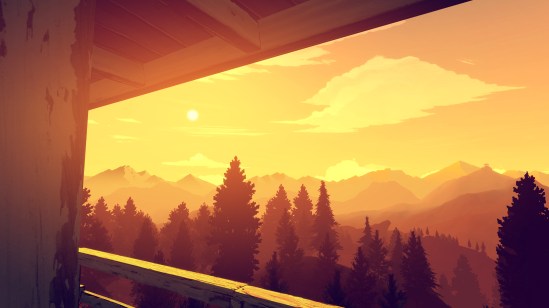
Campo Santo’s debut title, Firewatch, is a game begging to be compared to the likes of 2013’s Gone Home. Both are centered around environmental storytelling, picking up and examining objects, and both play with genre in order to place the player inside the headspace of their main characters. But such comparisons, appropriate as they might be, don’t tell the whole story here.
For starters, the quality of the voice work in Firewatch, as well as the naturalistic dialog of the script, is exceptional. Henry, the player character in Firewatch, and Delilah, a lookout supervisor heard only over a two-way radio, are two of the most complete, human characters I’ve seen rendered in a video game.
And it’s the emotion at the core of these characters that drive Firewatch’s narrative. The game’s opening prologue alone is a thing of beauty, an emotional gut-punch that sets the tone for everything that follows. It reminded me of the montage early in Pixar’s Up, but using the merits of the video game medium to express itself rather than film.
Firewatch is filled with little moments like this, and its attention to small details is what keeps it so compelling throughout its four-hour tale. The gorgeously stylized art plays a large role in this, keeping things minimalist such that the details stand out. The littlest objects in this game feel imbued with meaning, from the bottle of Irish whiskey encountered early on to the ring on Henry’s finger. For story-focused games like this, sweating the small stuff is what differentiates between mediocrity and greatness, and in that regard, Firewatch feels crafted with the utmost care.
At the end of the day, Firewatch is a game about how we deal with problems beyond our control. Do we flee from them, frightened by the impossibility of facing them head-on? Or do we construct new problems for ourselves – more straightforward, easier to deal with – as a means of crafting some sense out of senselessness?
Firewatch explores the concept of escapism, about what it says about us as humans that we so often turn to alcohol, to nature, to a job, even to video games, for solace when the going gets tough. Whether some amount of escapism is healthy, or at what point it veers into self-destruction, isn’t clear. Firewatch doesn’t have the answers. But it raises these questions to the player, and as its credits rolled, as well as in the days that followed, I couldn’t stop trying to answer them for myself.
6. Inside – Playdead

I thought Playdead’s 2010 game Limbo was a solid debut, but it never stuck with me the way it did for some people. While it’s opening couple hours were equal parts unsettling, mysterious, and horrific, the back half of the game seemed to lose its way, instead relying too heavily on puzzle design and leaving the atmosphere and world-building to the wayside.
Inside, their sophomore game, certainly does not have that problem. This game, despite its rather inconspicuous title, is one of the most gripping, shocking, and immaculately well put-together games of the year. For what it’s trying to do, Inside is damn near perfect.
Conceptually, Inside plays very similarly to Limbo, but refined to an insane degree. Limbo rubbed me a bit the wrong way with its “learn by dying” gameplay, while Inside telegraphs each moment so flawlessly that anticipating danger is vastly more intuitive. Not only that, but the puzzles are much more organic throughout, with strong ties to their respective environments, as well as solutions that oftentimes reveal something about the game world itself. Inside’s gameplay and storytelling are continually reinforcing and playing off of one another in this manner, which is, in my opinion, the true differentiator for exceptional design.
This is all showcased masterfully in the game’s finale, which is genuinely one of the most surprising, utterly fucked-up things I’ve experienced in a game. Maybe ever. And unlike many games with unexpected endings, Inside remembers to keep gameplay front and center, and it benefits significantly from this. As horrifying as what’s on-screen is, the manner in which the player must interact with it takes things to an even darker place.
I still don’t really know what Inside is actually about, but I like it all the more for that. I regard it in the same way I would a really good piece of art-house cinema, or an experimental song. It doesn’t necessarily have to mean anything, as it can simply function as the manifestation of some inexplicable thought or mood. Because everything on display here is so affective, Inside had me enthralled from its first moment to its very last.
5. The Witness – Thekla, Inc.
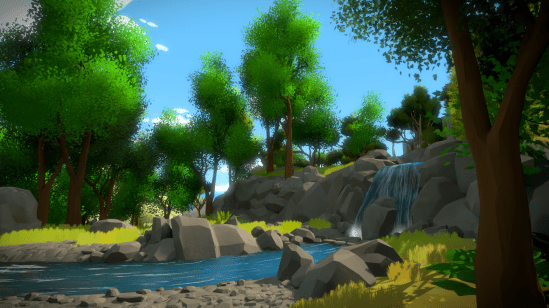
Something like 10 hours into Jonathan Blow’s The Witness, I close it down at the end of a play session, with my mind in a hazy state of exhaustion. I’m greeted with the familiar Windows desktop, but with stacks upon stacks of MS Paint windows strewn across it. They’re screenshots of my most recent play session. But across the dozens of JPEGs are scribbles in red, green, some blue. Madness. Information written in a language only I understand. Lines drawn and redrawn and X’ed out as I slowly but surely crawled my way through innumerable line mazes. Across one is simply emblazoned “FUCK THIS PUZZLE” in fat red letters. Another has a line tracing around the shadows of tree branches in zig-zag fashion. “What did I just do??” I think to myself as I close them all one by one, like cleaning up after a night of binge drinking. “What the hell is this game??”
This is The Witness, one of the most intensely frustrating and insidiously clever puzzle games I’ve ever played. Its premise is dead simple: solve puzzles involving drawing lines from the start to the finish. But in its execution of that basic concept, it continuously transcends it. Just when I thought I’d seen all the game had to offer, it dives deeper still, exploring its concepts more thoroughly than I ever imagined possible.
Like Braid before it, The Witness is obsessed with that eureka moment, that single grain of an idea that grows out of trial, error, and trial again. It explains nothing, instead forcing its players to learn by doing. And in doing that it wastes nothing. Every puzzle feels necessary, a next logical step in the nonverbal conversation that The Witness is constantly having with its player.
In that sense, the experience of playing The Witness is finite and fleeting. Once you’ve completed it once, you can never relive that initial playthrough again. A single screenshot can ruin everything. A single hint can alter the dynamic of hours of gameplay. By that token, The Witness is something of an anachronism, standing defiant in the age of the Internet.
And yet, I’ve never played anything like it. Draw your lines of inspiration to Myst or the original Legend of Zelda, fine, but that doesn’t even begin to express everything going on here. The Witness, faults and all, is a truly visionary game, the likes of which don’t come around often.
4. Doom – id Software

2016’s Doom isn’t just some precious, backwards-looking nostalgia trip to revive a dead franchise from the 90s. I don’t give a damn about Doom as a series, and I still think this is one of the best fucking shooters of the year. As id Software found out, ripping demon faces is a timeless sort of thing, you just have to find the right ways to modernize it.
And find them they most certainly did.
The big one is that they figured out what makes shooting in a Doom game fun and unique in 2016. The combat in this new Doom is so good in part because it has an inherent rhythm to it. The action is ultra-fast, with no reloading, no cover mechanic. If you find that you keep dying, the solutions are as follows: a) kill faster b) kill better. Demons that are taken down with up-close, melee finishers drop health and armor, while those you chainsaw in half drop ammo. This encourages players to constantly stay moving, bouncing from demon to straggling demon like some sort of unholy murder pinball, in order to stay well supplied. These kill animations, quick as they are, also serve as small punctuation marks to the combat flow, giving players a brief second to reorient themselves and consider a weapon change, if need be. This flow is also highlighted by the game’s seriously killer soundtrack, which follows the action, inserting musical fills and bass drops as you initiate such “Glory Kills” as tearing a demon’s heart out and feeding it back to him.
However, as any great shooter will illustrate, excellent combat is only half of the recipe for success. The other half is excellent pacing between encounters. In this, Doom is equally strong. The map design is another area where this game channels the best parts about old school shooters. There are puzzles, platforming challenges (which don’t immediately suck!), and secrets that are well worth finding.
Levels aren’t afraid to backtrack and loop around, even branch out around a big hub area. This is a shooter that unapologetically features a map, and the levels are so intricate and full of things to discover, that it’s very much appreciated.
Remarkably, Doom isn’t for “only 90s kids” and it isn’t modernized to the point of being “Call of Duty with Demons” either. I can’t stress enough how easily it could have lost its footing and fallen decidedly into either of these two wells. Instead, it performs a seemingly effortless balancing act, being at once true to its roots and yet remarkably fresh. For taking on such an unenviable task and knocking it out of the park, Doom is one of the very best games of 2016.
3. Uncharted 4: A Thief’s End – Naughty Dog
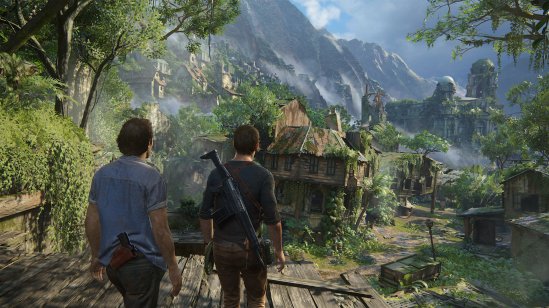
If someone had told me, prior to Uncharted 4 being released, that it would usurp Uncharted 2 as the best in the series, I would have laughed them out of the room.
And I would have been dead wrong.
Uncharted 4 is a staunch reminder to never, ever underestimate the Naughty Dog team. When it comes to linear, cinematic experiences, there simply isn’t a single other developer in the world operating on the same level.
This game is single-handedly the crowning technical achievement of the year; Naughty Dog makes the PS4 hardware fucking sing in ways I would have never thought possible. Put simply, if this game doesn’t make you do multiple double takes at your television throughout its nearly 15 hour campaign, then buy a better television.
But the Naughty Dog magic extends far beyond graphics. You would be hard pressed to find a sequence in any game this year capable of matching the Hidden In Plain Sight chapter in A Thief’s End. Beyond how technically accomplished that particular chase is, it’s hands down the most thrilling sequence of the year, escalating in scope to a point of sheer unbelievability. By its end, I was laughing out loud. Not because it was humorous, but simply because the sheer audacity of it blew my mind. If for some strange reason you could only play 15 minutes worth of video game from 2016, holy fucking shit, make it these 15.
However, at the risk of sounding dismissive, gorgeous visuals and cinematic set-pieces are all things we’ve grown to expect from Uncharted games. What I didn’t expect, and what sets this game apart from being “just another Uncharted game”, is how it re-orients the player’s perspective on Nathan Drake. Even after 3 games of wise-cracking, we still don’t really know who Nathan is all that well.
In its opening hours, Uncharted 4 asks a few simple questions: what does a video game protagonist become without the video game adventure to go on? What happens when he’s just a retired guy with an attic full of ancient artifacts? What kind of a person is Nathan Drake when he isn’t falling from cliffs?
What’s brilliant about this final hurrah in the Uncharted series is that its as much a character study of its smarmy lead as it is a big, audacious sendoff to the series. It is the rare sequel that enriches its prior entries rather than detracts from them. For all of that, and more that I don’t have time to mention, this is one of the best experiences I had playing a video game in 2016.
2. Hitman – IO Interactive
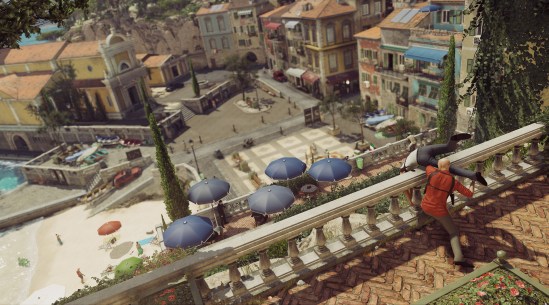
How would you like to dispatch the target? We can swap out his golf ball with an exploding one before his driving range lessons. We can disguise ourselves as the new cook and mix rat poison into his lunch. If you’re feeling more Freudian, we can pretend to be his therapist and listen to him have a breakdown lying back on the couch before we suffocate him with his own pillow. Or we could exploit the guilt he has over his grandmother’s death to make him think she’s haunting him. And if that all sounds too elaborate for you, we could simply garrote him with fiber wire and throw his body into a wood chipper, as sacrifice to the Coen gods.
These are but a handful of options amidst a smorgasbord, to dispatch one target, in one level, of 2016’s Hitman.
Hitman makes no apologies for being a video game. It’s AI are stuck in easily predictable and malleable patrol loops, while the rules of its disguises are highlighted obviously in its UI. Hell, even the biggest assignation opportunities have giant objective markers to ensure that players know exactly how to execute them.
You would think this would all be a bit damning, indicating a dumbed down Hitman experience with virtually no challenge. But there you would be wrong. See, 2016’s Hitman is built from the ground up with replayability in mind. While success of eliminating a target is all but assured, the manner in which the player accomplishes an assassination is what counts.
In the first major mission, set in Paris, the game immediately establishes your target. He walks down some stairs and through a crowd right past you within the first minute of the level. What’s to stop you from pulling a pistol and gunning down both him and his body guard in the middle of the crowd? Less than you might think. However, that would be a horribly unimaginative solution in a game that has an absolute embarrassment of riches on offer.
This Hitman formula starts with the levels, which are massive, intricate creations filled with assassination opportunities in the dozens. They are less like traditional video game levels and more like wide open playgrounds. You can even select from several spawn points around the map after giving it a couple playthroughs, some of which place you in disguise and next to a target immediately. Much as that might sound like a cheat code, it is completely valid. It is in design decisions like these that developer IO Interactive rewards creativity and actively encourages players to try unexpected things.
Built on top of that are the game’s so-called Elusive Targets, temporary instances of the existing maps with new, ephemeral targets, who can either be eliminated or escape the player permanently. These targets create unique moments in the game (a target might only be available for attempt for a specific week on the server before they are removed forever), and the zero-room-for-errors play sessions they create are some of the most tense of any game this year.
Then there’s the game’s episodic structure, which, maligned as it initially was, turned out to be one of its greatest assets. Spacing the release of each level apart by a few months allowed for each to be explored and dissected, like a great episode of television. If it had all been released at once, ala the Netflix model, you might say, then players would have been more likely to binge through the season without taking the time to experiment.
For all of these reasons and more, Hitman is one of the most exciting, unique, and rewarding stealth games to come along in years. I still can’t wait to replay Sapienza again.
1. Overwatch – Blizzard Entertainment
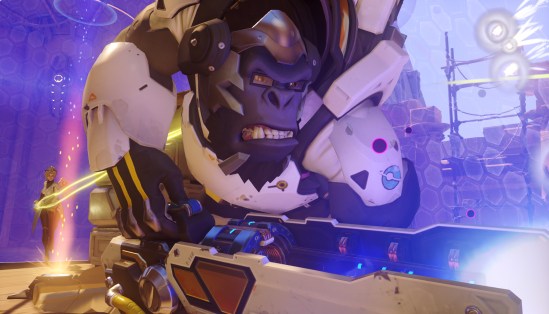
Multiplayer games typically don’t find a spot on my end of the year lists (mostly a matter of taste), but not only is Overwatch the exception to that trend, I think it’s the single best game of 2016.
The knee-jerk comparison to make here is that Overwatch is like Valve’s Team Fortress 2. But whereas Team Fortress 2 was balanced around 9 distinct classes, Overwatch boasts an impressive 21 (now actually 23 at year-end 2016). While that many distinct character options sounds like a recipe for disaster, it actually works remarkably well. This is because, rather than attempt to balance every character against every other character, Blizzard opted instead to balance entire team compositions against one another. It doesn’t matter that Mei, with her devastating ability to freeze enemies and follow up with an icicle to the cranium, feels overpowered in one-on-one confrontations. She’s supposed to. Evaluated individually, she seems absurd. However, picking off stragglers is her whole dynamic. A coordinated team can dispense with an overly aggressive Mei in mere moments. Yet a careless Mercy, who isn’t staying mobile or being communicative with her team, can be dispatched by a flanking Mei in mere seconds, crippling that team’s healing support.
This is part of why the game’s meta evolved so dramatically throughout 2016. From Bastion to McCree to Genji to DVa to Zenyatta to Symmetra, nearly every hero was “way too OP” at some point, in large part because player strategies hadn’t yet adapted to how to deal with them. Bastion, who was once a complete showstopper when the game released, is now one of the least frequently picked heroes, because of how many counters players had learned from him during his overuse. Sure, in turret mode he can spew up to a crippling 525 dps, but Genji can reflect that right back at him. Zenyatta can hit a stationary target with 230 points of damage at once with ease. Any hit-scan hero, be it Soldier 76, McCree, or Widowmaker, can make short work of a sitting duck target. The options are there. Whether or not things seem broken is largely due to an inability to adapt.
As much arm-chair game design as Overwatch inspired in me and my friend group, the end result was almost always the same: we were wrong, Blizzard HAD thought of that, and we were all just playing checkers with a game that could already scale to chess.
Keyword there being “scale”. See, the other thing that makes Overwatch such an incredible achievement is that despite its E-sports scene and deep team strategies, it’s also the most accessible competitive shooter of the year by far. People who have never played an FPS before can get into Overwatch, and there are characters designed to capitalize on those very players who might not have sweet no-scope headshot skills.
Then there’s the ways in which the design has actually encouraged and helped to foster Overwatch’s excellent community. There are no real differences between kills and assists, healing is given equal weight in game stats to eliminations and objective time, and the only statistics shown to other players at the end of a match are your best ones. This kind of positive reinforcement has gone a long way toward pushing players to strive for team victory over their own personal glory. In a competitive multiplayer shooter, to get the majority of people to play not just for themselves is huge.
Overwatch is a game I could say nice things about for hours, and yet it’s also a game I could talk total trash on for equally as long. Such is its capacity to inspire passion. The best moments I had playing games in 2016 were matches of Overwatch with full teams of my friends. Winning, and winning alongside a team that coordinated and earned victory decisively as a unit, is fist-in-the-air triumphant. Losing, on the other hand, can be utterly soul-crushing.
To that end, I cursed a lot at Overwatch in 2016 too. And that’s because this is a multiplayer game actually worth giving a shit about. So, to put it simply, and to finally bring this long list to a close: Fuck you, Overwatch, you’re the best damn game of 2016. I look forward to spending 2017 with you.
 defectivepixeltest