Okay, first things first: this list is incredibly late. I am aware. But, I’d still rather put it out late, after I’ve played the stuff I wanted to get to, than not at all. Secondly, there are a couple of notable omissions I wanted to call out up front. Basically, these are the games that I couldn’t get to for one one reason or another, that could have potentially made this top 10 list were I able to get around to playing them. For 2014, these are (in no particular order):
Divinity: Original Sin
Mario Kart 8
Bayonetta 2
Call of Duty: Advanced Warfare (I dunno, I heard this one was pretty good)
So now, with those out of the way, I’d like to do a few honorable mentions. These 2014 games are not part of the list, but ones I’ve played, really enjoyed, and I think you should consider checking out:
Honorable Mentions:
Neverending Nightmares
The Vanishing of Ethan Carter
Titanfall
The Evil Within
Finally, and without further stalling, here is my personal Top 10 Games of 2014 list:
- Threes – Sirvo
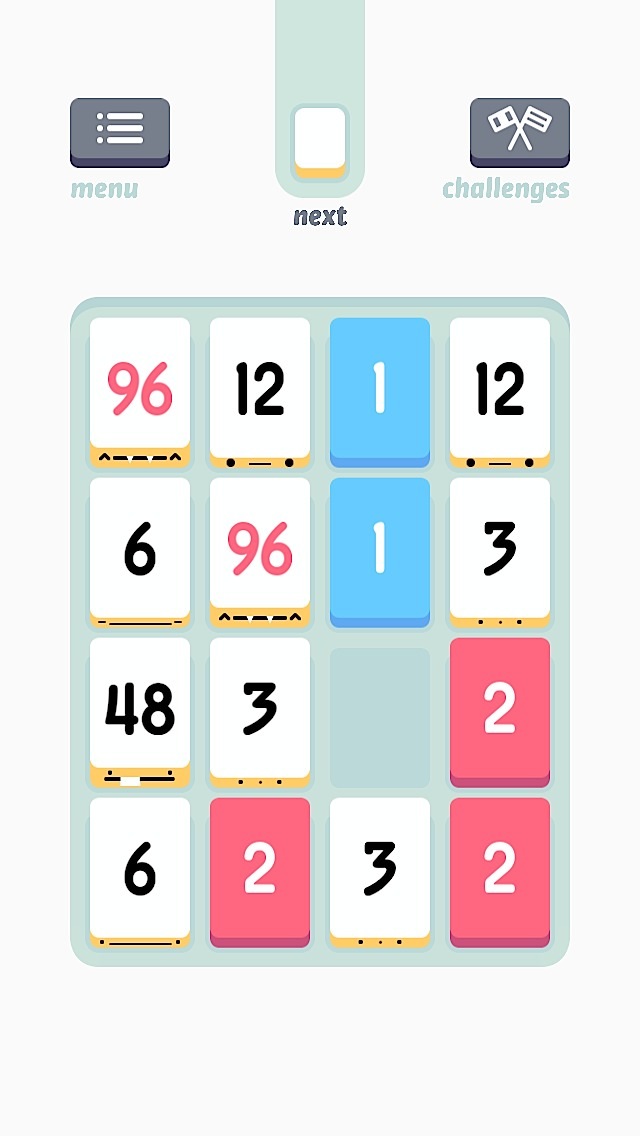
One of the saddest things in gaming this year is that most people likely played 2048 instead of Sirvo’s Threes. This dead simple and deviously addictive puzzle game for iOS and Android was the best thing to hit phones in 2014. It’s at once irresistible, between its joyous music and adorable anthropomorphic number blocks. Threes is a great example of perfect gameplay loop. I can’t even quite put it into words. Something about it just scratches a part of my brain that, on some subconscious level, needs to double large numbers divisible by three. Seriously, hang on one second. I almost have a 768…
- The Fall – Over the Moon Games

Though only the first part of a soon-to-be-continued episodic series, The Fall starts off on some incredibly strong ground in its first episode. The game is essentially a classic adventure game, complete with puzzles and some action elements. And like any great adventure game, The Fall is all about its writing, narrative, and mood.
There are no human characters in The Fall to talk to; all of the dialogue in the game is one AI addressing another. That might sound like the means of telling the world’s most lifeless story in the world, but Over the Moon Games injects the characters and set pieces in the game with a dark humor and an urgency that propels the narrative forward. Despite its eerie, far-flung dystopia, The Fall asks a very old question: Do the ends justify the means? It uses its AI protagonist as a metaphorical device for examining what happens when we abandon our central rules and values in the logical pursuit of a singular objective, and what we have left when the rug is pulled out from under us. There’s still a lot more for The Fall to explore in this vein, but it’s off to a brilliant start, and you absolutely should play it.
- South Park: The Stick of Truth – Obsidian Entertainment

The Stick of Truth is a fan service game, through and through, and yet it delivers its myriad callback jokes and references to past South Park episodes in such a joyous, loving way that it is an absolutely irresistible experience. Trey Parker and Matt Stone wrote the game’s dialog and story, and holy hell does it show. For as much comedic material as is in The Stick of Truth (and there is something like 10 hours worth), something like 90% of the jokes landed for me. In a video game, that’s practically unheard of. Not since Saints Row The Third has a game made me laugh as hard or as often as this South Park title. And it’s not from just lazily porting jokes from the show over; whenever they can, Trey and Matt and the developers found ways to integrate South Park’s sensibility into the video game medium. Bring Butters along in your party? Well, he’s got your enemies’ aggro, because as the game points out, he’s a “Born Victim”. Cartman? He can consume twice the healing food per turn, because he’s “big boned”.
Not only that, but the game pushes against some serious taboos for video games in much the same way that the show is designed to push people’s buttons. There’s a series of quick time events in The Stick of Truth that were bound to piss some people off, and its made all the more shocking by forcing the player to interact with it. But that’s South Park’s nature, and to bring it into video game form, moments like that had to be included.
And none of this is to mention what a solid little RPG The Stick of Truth is. Sure, it’s not doing anything terribly unique (it’s essentially a JRPG clone) and it can be broken pretty easily (the late game attacks are way overpowered), but the humor and visual creativity of the game elevates the gameplay in a way that I found myself never tiring of playing it. It reminded me a lot of the esoteric JRPG Barkley, Shut Up and Jam: Gaiden, in the way that the gameplay never got in the way of my enjoying the humor. And that comparison is high praise to be sure. Fans of South Park, this game is required playing. And for fans of funny video games, same goes to you.
- Wolfenstein: The New Order – MachineGames

Wolfenstein strikes a strange tone – a unique blend of somber, apocalyptic darkness and over-the-top, occasionally slapstick humor – that shouldn’t really work, but it results in a game that feels truer to an actual B movie than any in recent memory. Even the game’s cutscenes, while a bit too common, are fantastically well directed, with a variety of camera tricks and interesting cinematography.
The game itself, meanwhile, balances its fairly basic stealth/action combat with a slew of character building set pieces and lively, distinct level design such that the entire experience is a breath of fresh air even for the most jaded of FPS players. It may be the best paced game this year. And though that sounds like a weird compliment, it isn’t, because every adrenaline-fueled shootout and quiet trip to get coffee in the night feels earned. Despite how ridiculous Wolfenstein’s premise is, its cast of characters are remarkably likable in a way that few games ever manage. B.J. Blazkowicz, that grimacing face in the HUD of Wolfenstein 3D, might be the most fantastically dumb character name in video game history, but he’s rendered as a human being in The New Order. That alone was a surprise. And that this was the first Wolfenstein game in years that I cared about was an even bigger one.
- Dragon Age: Inquisition – Bioware

Dragon Age: Inquisition had an unenviable task: salvage the Dragon Age series or damage it irreparably. After the rushed pseudo-sequel that was Dragon Age II, Inquisition was going to be responsible for redefining what exactly Dragon Age was going to be moving forward, for better or worse. Bioware seemed to take that task to heart, as it spent nearly triple the amount of development time on Inquisition as it did on the series lackluster second installment. The good news is that it paid off, winning me (and a whole lot of fans) back over to the series.
Chief among Inquisition’s achievements are that it manages to retroactively give a significance to the events and characters of Dragon Age II, a game which felt like an inconsequential blur at the time. Also of note are its open landscapes, which are vast yet undeniably handcrafted. They are constructed in such a way that they rarely feel like wide, flat expanses, but rather like dense, geometrically complex locales that reward exploration and a keen eye with a new pathway, treasure chest, or visual splendor. It’s unfortunate then that many of the side quests while exploring these colossal maps lack the moral quandaries and narrative weight of the original Dragon Age. As full of life as the characters and world of Inquisition are, too often does a new cave simply hide yet another corpse clenching a letter.
But despite its opting for too much breath and not enough depth at times, Inquisition is a seriously compelling game. Bioware has refined Dragon Age’s tactical squad combat to the point where each encounter feels satisfying and each character class can prove vital. It is in no way as difficult as the original Dragon Age, and button mashing isn’t as discouraged as it probably should be, but on higher difficulties, there’s a solid balance between action and pre-combat planning.
Like Origins before it, Inquisition has moments where, as the player, you might make a decision, believing strongly in the moment that it is the right call, only later to have the counterarguments and consequences to that choice thrust back in your face. It is one of the few games I’ve played which has made me truly regret some of my actions. Which is why, consequently, Inquisition’s rush-to-the-boss, happy-go-lucky ending is such a slap to the face. In any game claiming to be 100 hours in length, the journey is more important than the destination, but that length also demands a kind of closure that Inquisition doesn’t even come close to.
Clearly, I have complicated feelings about Dragon Age: Inquisition. Even if I have numerous complaints about the game, make no mistake, it earns its spot on this list. The highs of Inquisition were some of the greatest of 2014. I loved its bombastic score, which felt classically heroic in a genuine way, and I thought that it contained some of the best writing Bioware has done to date. I’m only frustrated at this game because it should have been much higher on my list, were it not for some bizarre design decisions.
At the end of the day, Inquisition is an excellent, if somewhat over-inflated, Bioware RPG. Its cast is intriguing and diverse, its politics are as complex and fascinating as one could hope for, and its quantity of lore is tremendous (perhaps more than any game ever made, and I mean that). And brilliant story quests like “Wicked Eyes and Wicked Hearts” bring that trinity together in ways that are a thing to behold. That quest is my favorite individual level of 2014; it’s classic Bioware. I only wish Bioware could figure out how to make their game feel epic in scope without simply building a series of loosely-connected sandboxes. It’s no Skyrim in that sense, but damn if I didn’t spend an ungodly sum of hours getting sucked into Inquisition’s world. Oh, and this game is fucking gorgeous, by the way. In case you didn’t know.
- Far Cry 4 – Ubisoft Montreal
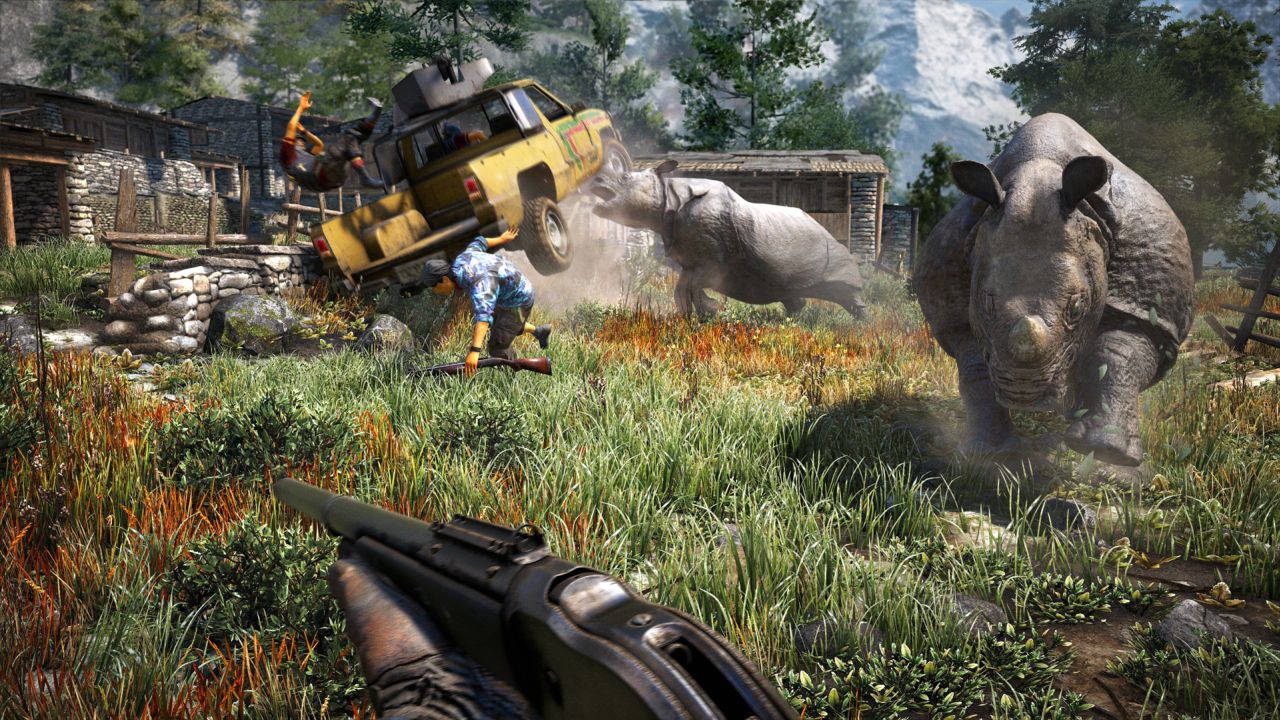
Far Cry 4 should have come with the tagline: “So we heard you guys liked Far Cry 3.” Normally, I hate when game designers regurgitate a new game into a series with near-identical mechanics and systems, opting only for a cast and locale change. It just feels too much like a money grab. But when the structural skeleton for your game series is calcium-enriched and adamantium-plated, like Far Cry 3’s was, it makes a lot of sense to opt for “if it ain’t broke, don’t fix it.”
Rehash or no, Far Cry 4 is also an improvement on 3 in several ways. Kyrat, the fictional Himalayan nation that serves as Far Cry 4’s setting, is bursting with personality, and is a largely untapped locale for a video game. The cast of characters is excellent, and the game finds a much better tonal balance between its off-the-wall satire and the serious moral quandaries it places the player in. The narrative is better as well; it manages to deliver one of the best endings of the year, much to my surprise, given the relative wet fart of a conclusion that Far Cry 3 mustered up.
And the stuff that worked before? It’s back again, and then some. Letting loose tigers on your enemies and setting fire to drug fields? Yup. Seriously rewarding stealth combat in which you chain together knife takedowns? Hell yeah. Wild hallucinogenic sequences? Of course. Added to the mix are things like a miniature single-passenger helicopter and elephants that you can ride into battle, taking the piss out of your enemies. They are nature’s battle tanks, after all.
I’ll keep this one simple: if your primary goal for a game is simply to have a ton of fun sneaking around and blowing stuff up, Far Cry 4 is your game of 2014. It’s a joy to play.
- This War of Mine – 11 bit studios

About two in-game weeks into This War is Mine, my main scavenger character, one of just three survivors who had been with me since the beginning, was caught stealing and was gunned down in the night. It was a tremendous blow, made all the more harsh by the immediate autosave the game made, preventing any ability to reload. He was the character I had relied on the most, and now that he was gone, things seemed hopeless. The other survivors in my safe house fell into depression over his death. That, combined with their various wounds, sickness, and plaguing hunger, made things look bleak. And yet, the game moves on at its unyielding pace. Days of cooking food, managing sleep schedules, or building new equipment and nights of scavenging the various bombed-out remains of the city. There is no moment to catch your breath. War is hell, and it doesn’t stop for anyone, least of which the dead.
Despite the unforgiving nature of the game, along with its oppressive mood and rather mundane moment to moment gameplay, This War of Mine is remarkably playable. The game is in no shape or form “fun”, however, its gameplay loop is so well refined that you as the player never quite feel like you can quit. Miserable as the game’s circumstances might be, you’re always just one step away from finally finding some bandages, some moonshine, or just the next small morsel of food. And that sort of spoon-feeding resource management is surprisingly compelling. There are small moments of triumph to be had in the game, and those are what will keep you going in spite of the grimness of it all.
This War of Mine is about war with all the romantic notions about glory, honor, and heroism stripped out. The only thing that remains is a series of difficult decisions. Should I feed everyone today, or trade away my food for medicine my survivor suffering through illness needs? Should I barter for necessities with homemade cigarettes and moonshine or should I resort to stealing? Am I willing to kill for the next day’s meal? Am I willing to risk trying that? There are no easy answers that you can feel good about, and there is no perfect strategy. There’s just persistence, luck, and the continual hope that the war will end tomorrow. And This War of Mine is very smart not to reveal the purpose of its fictional conflict. Because, from the perspective of a civilian, it doesn’t really matter. As Gandhi once said: “What difference does it make to the dead, the orphans and the homeless, whether the mad destruction is wrought under the name of totalitarianism or in the holy name of liberty or democracy?” The answer to that question, as This War of Mine points out, is none at all.
- The Talos Principle – Croteam

It was surprising enough that Croteam, the developers behind the Serious Sam games, designed as challenging and whip-smart a puzzle game as The Talos Principle. But the fact that they infused its dozens of block and laser puzzle rooms with such profound philosophical allegory left me completely floored.
The Talos Principle attempts to mesh two seemingly at-odds aesthetics, divinity and technology, in a way that almost doesn’t work at first. Coming across a Linux-like command line terminal in the middle of what looks like The Garden of Eden for the first time, things sort of just feel wrong at a gut level. But as you progress through the game’s very deliberate slow burn, the narrative unspools itself in a way that is simply arresting.
And the puzzles designs aren’t just an afterthought. These are brain contorting, genius puzzles whose solutions incite the same kind of dopamine rush that the Portal games did. The moment of realization when solving a puzzle in The Talos Principle is one of pure elation. You’ll go through the entire arc, from feelings of confusion and even mild frustration, when the solution you think you have won’t work, to feelings of triumph and accomplishment when you finally figure it out. It’s an effective loop, and a difficult one for a puzzle game to balance as well as The Talos Principle does.
At the end of the day, The Talos Principle is deceptively simple puzzle game that subverts its genre while simultaneously reaching beyond it. It contains the best writing of any game of 2014, with dialogue that could make a philosophy student swoon. It is one of the most intellectually stimulating games of the year, one that will leave you thinking about creationism, artificial intelligence, what it means to be human, and – quite literally – the meaning of life long after the credits roll.
- Middle-Earth: Shadow of Mordor – Monolith Productions

On its surface, Shadow of Mordor is essentially an Assassin’s Creed game set in the “Lord of the Rings” universe, but what Monolith managed to craft around that experience is truly astounding. The central gameplay mechanic around which the game revolves was dubbed The Nemesis System. Essentially, it is a dynamic hierarchy of Uruk-hai leaders and War Chiefs that both reacts to the player and is fully capable of existing independent of the player. The effects of this system on the moment to moment Shadow of Mordor gameplay are numerous and far-reaching. By reacting to player death, the Nemesis System actually manages to provide meaningful consequence to failure in a way that is intriguing rather than frustrating. The system’s randomized nature also seeds the possibility for seemingly infinite combinations of crazy, “holy shit” moments, that test the player’s ability to react to sudden shifts in combat scenarios. Not only that, but as the player progresses, they gain the ability to manipulate the system on quite a literal level, granting a level of player agency that no open world game before has quite matched.
Though it may seem strange to commend a game for a singular AI system, this is no mere gimmick. Strip out all notions of how undoubtedly painstaking it must have been to program, and The Nemesis System is still a groundbreaking achievement. It integrates itself into the gameplay experience so well that I hope to see more games attempt something similar.
Shadow of Mordor is, in a lot of ways, the promise of emergent gameplay realized. It takes the sorts of randomized systems that have previously been utilized in open world games to provide interesting, but largely inconsequential, side content and transplants them into a central role at the core of the game. It also borrows intelligently from several AAA franchises, such as the aforementioned Assassin’s Creed’s mobility and stealth, as well as Batman: Arkham Asylum’s excellent combat. It’s a shame it doesn’t tell a more interesting story, especially given the richness of its Tolkien source material, but taken purely as a gameplay experience, Shadow of Mordor is one of the most innovative and well-designed games of 2014.
- Alien: Isolation – The Creative Assembly
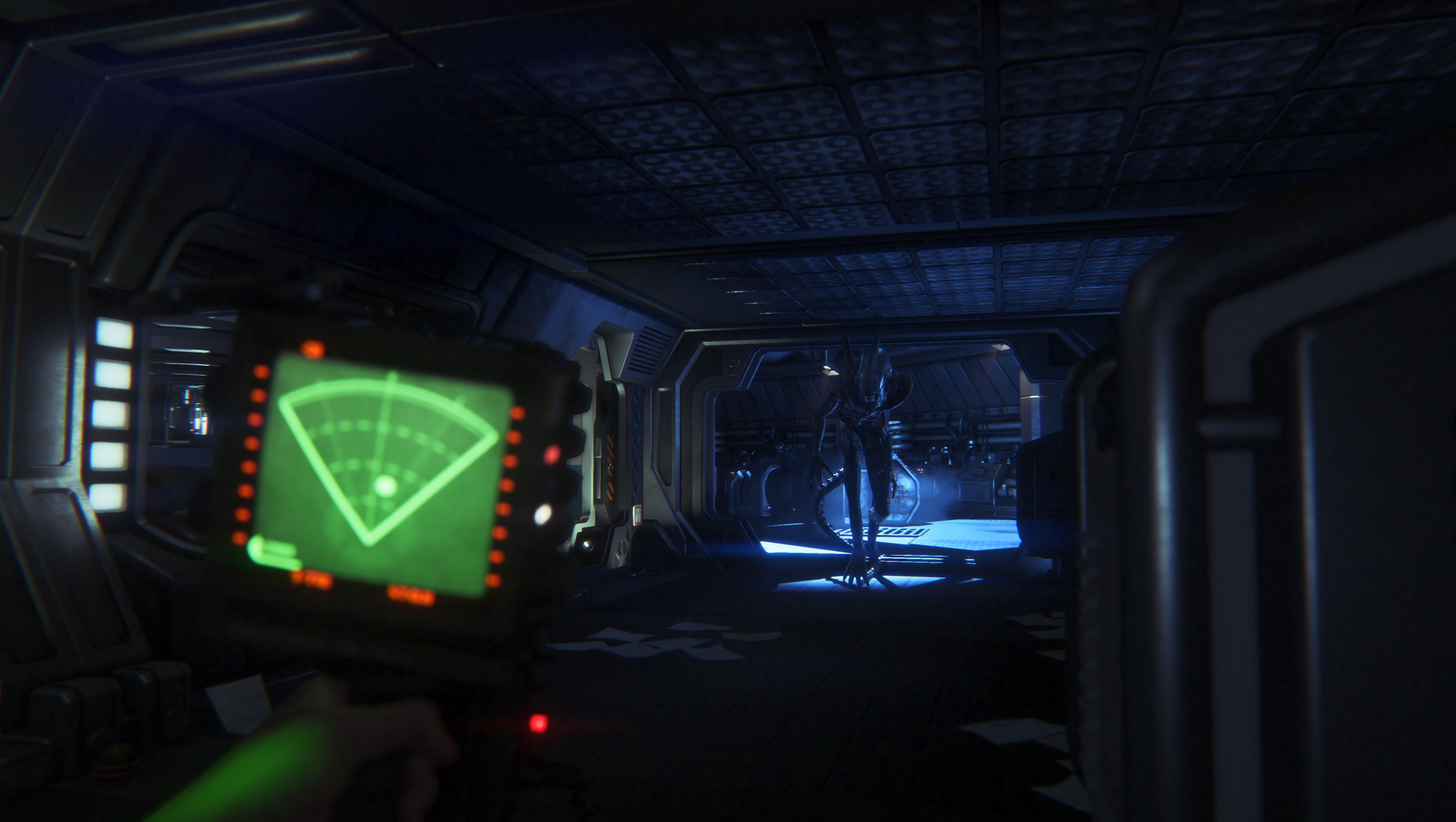
If 2014 was a great year in gaming for any one reason, dynamic AI was it. While Shadow of Mordor crafted an engaging group dynamic simulation, Alien: Isolation focuses instead on a singular character: the infamous Xenomorph. It brilliantly pairs an adaptable, non-scripted, and unkillable rendition of the Xenomorph with the visceral first-person stealth gameplay of Amnesia: The Dark Descent. It turns out that’s a match made in hell. Not only is this an Alien game that’s actually good, which captures the design aesthetics and terror of the 1979 film, but this is actually one of the best horror games ever made.
Isolation is a bold game. It makes design decisions that would normally be huge taboos by modern standards – replacing checkpoints with physical save points in the game world, intentionally clunky menus, and threats that are at least somewhat based on pure chance – but it does all these things for the express purpose of making the player question every decision. It’s one of the only games this year where the threat of death is genuinely threatening. It’s one of the only horror games ever that manages to be truly terrifying without relying on the crutch of scripted moments.
And yet, despite its mostly procedural gameplay, Isolation is full of terrifying surprises. The game refuses to hold the player’s hand, some would say to a fault, but this results in situations of panicked uncertainty. Questions like whether or not the alien can reach you in a certain part of the level can linger with you for hours, until, just as you’re feeling safe, the creature’s viciously clever AI reminds you that, in fact, you are not. You never were.
Like any horror game worth its salts, Isolation’s sound design is top notch. The audio is not only terrifying, but absolutely critical to gameplay. 9 times out of 10, an attentive player will hear the alien before they see it, and that 1 other time, they are more than likely already dead. So, a good pair of headphones can save your life. And scare the ever-loving piss out of you. It’s a real win-lose.
And that starts to get at the real core of what works so well about Isolation: the tradeoffs. Take, for instance, the motion tracker from the classic Ridley Scott film. The game gives you that primitive sci-fi tool early on, and maps the damn thing to its own key. And it’s genius: it solves the design problem of dealing with a randomized AI while locked into a constrained first-person perspective, but its sharp beeping tone and the way it obscures your vision build tension remarkably well. In other words, while it’s a vital tool for player survival, using it also makes the game scarier. Some horror games have terrifying moments; Alien: Isolation builds horror into its design doc.
Isolation is one of scariest games I’ve ever played, and much of that is due to the incredible restraint the developers exhibit. Other games might make a player jump out of their skin more often, but Isolation takes an exorbitant amount of time to build up an oppressive atmosphere. It understands the key element of horror that so few games get right: that the jump scare is actually the moment of release, and what makes something truly terrifying is when the anticipation of that moment is given time to gestate. Once it does, dread hangs over every corridor, flicker of light, and ambient sound. And that’s why the Xenomorph works so well. Even when it isn’t present, the possibility of it appearing looms over nearly every moment. Not only that, but the developers managed the extremely difficult balancing act of having the alien behave rationally without becoming wholly predictable, and thus not scary.
Hats off to The Creative Assembly. Not only was Alien: Isolation their first horror game; it was their first game from a first-person perspective, period. That fact alone blows my mind. The game isn’t perfect; it’s far too long and the story doesn’t really add anything to the Alien mythology. But for every moment when its “haunted house in space” simulation works (and it works often), there’s nothing else quite like it. No game from 2014 had me engaged with it more. It is an exhausting experience, and I mean that in the best way possible. I feel like I deserve a badge of honor just for beating it. For all of that, it is my favorite game of 2014.
Oh, I almost forgot. With just a few .ini file edits, you can enable Oculus Rift support in Alien: Isolation. So, if you feel like having a nerve-shattering panic attack while playing the best game of 2014, you can absolutely do that. Just remember: in Oculus, everyone can hear you scream, and it’s really funny.
 defectivepixeltest